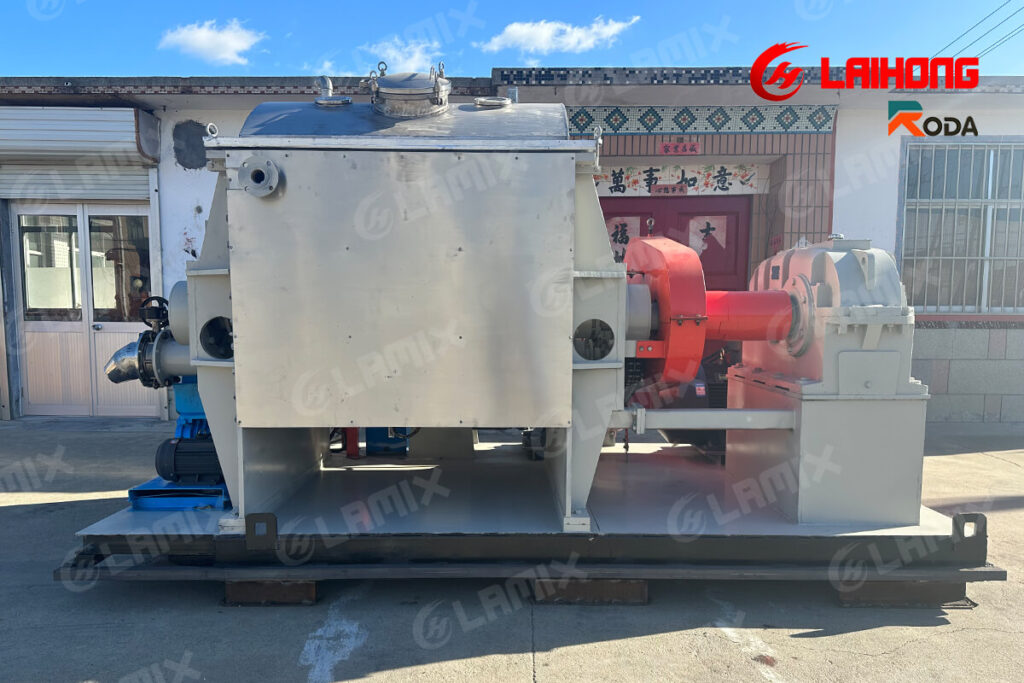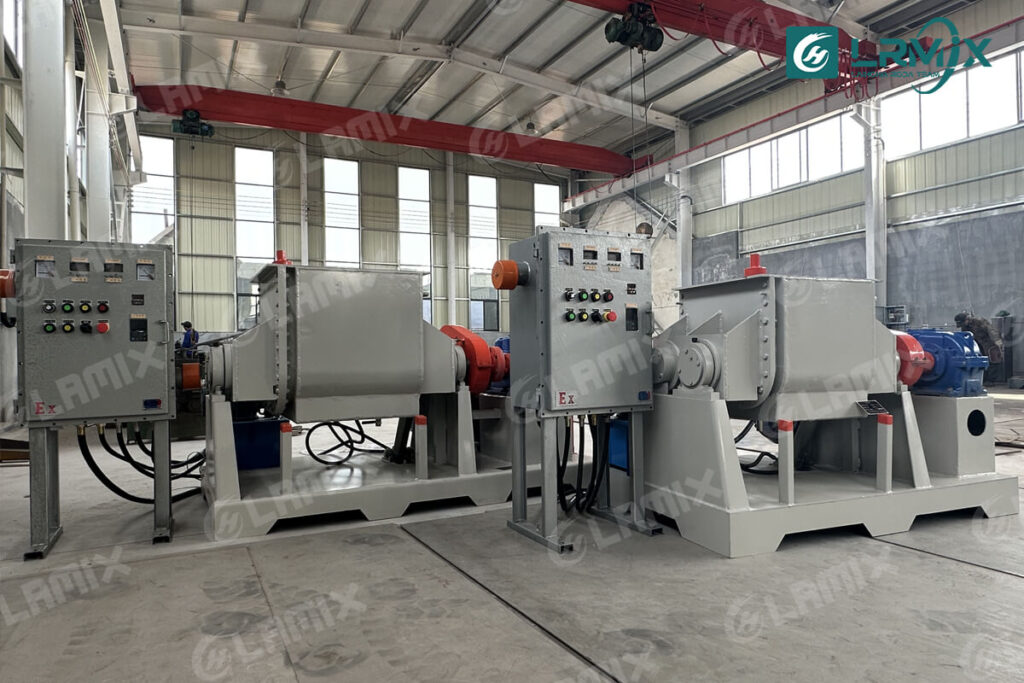
A sigma kneader is a horizontal mixer that uses two sigma-shaped blades rotating toward each other inside a double-trough chamber. The blades squeeze, fold and stretch the material again and again, which makes the machine suitable for thick, sticky and heavy materials that ordinary stirrers cannot handle, such as silicone rubber, adhesives, ceramic pastes and plastic compounds. So, how does a sigma kneader work? This guide explains the working principle, what heating, cooling and vacuum add to the process, and how to pick the right size and discharge type.
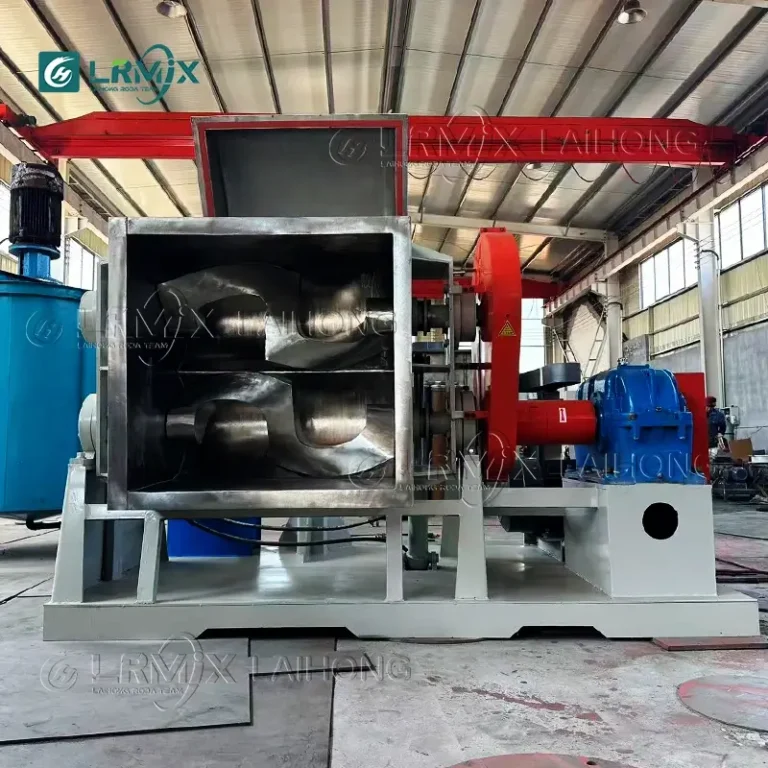
How Does a Sigma Kneader Work, Step by Step
1. Loading. Raw materials are fed into the open trough, either by hand or from a hopper.
2. Kneading. Two sigma blades rotate toward each other, usually at different speeds. As the material passes between the blades and the trough wall, it is compressed, folded and stretched. This is what turns separate ingredients into a uniform mass.
3. Heating or cooling. While mixing, the trough can be heated or cooled to control the temperature of the batch.
4. Vacuum (optional). The trough can be sealed and evacuated to remove air and moisture from the material.
5. Discharge. When the batch is ready, the finished material is removed by tilting the trough, by a screw, or through a bottom valve.
Why the Blade Design Works
The sigma shape and the speed difference between the two blades are what make the machine effective. Because the blades do not move at the same speed, material cannot simply rotate along with them. It is forced to move between the blades and the trough wall, which creates strong shear and constant folding. Even very thick material keeps meeting the blades, so there are few dead zones where unmixed material can sit.
Heating, Cooling and Vacuum
Many materials need temperature control or air removal during kneading, so these functions are usually built in:
- Electric heating: built-in electric heating for batches that need to be warmed.
- Circulating heating and cooling: the jacket connects to an external hot oil, hot water or cooling water source, so the batch can be heated or cooled as the process requires.
- Vacuum: up to -0.094 MPa, which helps remove air bubbles and moisture. This matters for products like silicone rubber and sealants, where trapped air leaves defects.
Three Ways to Discharge
| Discharge type | How it works | Best for |
|---|---|---|
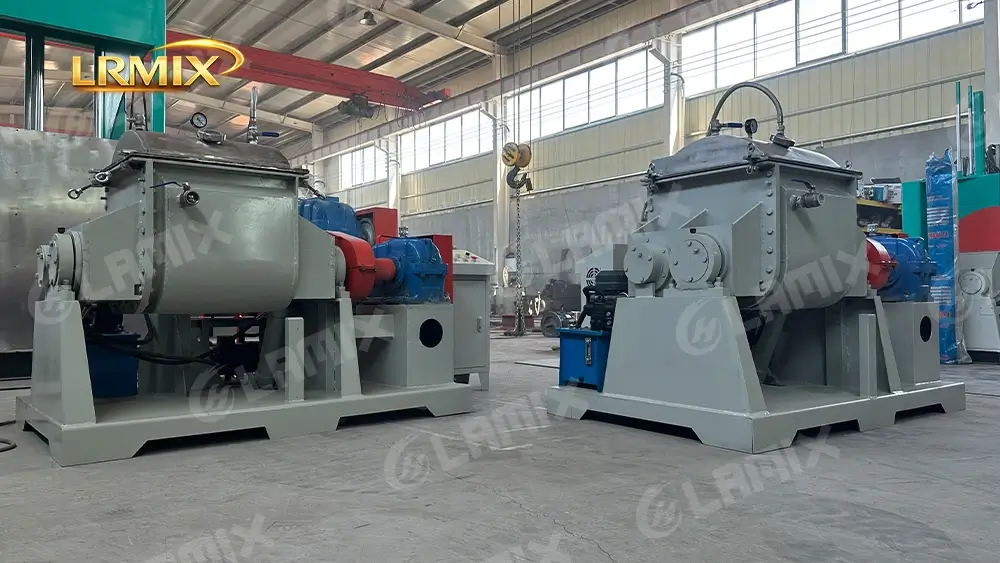
| Hydraulic tilting | The trough is tilted by a hydraulic system and the material pours out | Soft to medium viscosity materials, easy cleaning and frequent product changes |
| Screw discharge | A screw at the bottom pushes the material out | Very thick, sticky materials that will not flow on their own |
| Bottom valve | A valve at the bottom of the trough opens to release material | Materials that flow reasonably well |
Capacity: From the Lab to Full Production
| Scale | Capacity | Typical use |
|---|---|---|
| Laboratory | 1 L – 20 L | Formula development and small trials |
| Small to medium production | 30 L – 300 L | Small batch production and pilot runs |
| Production | around 500 L | Regular industrial production |
| Large-scale production | 1,000 L and above | High-volume production |
LRMIX builds sigma kneaders from 1 L up to 6,000 L.
What Materials Is a Sigma Kneader Used For?
The chemical industry is the most common user. Typical materials include:
- Silicone rubber and silicone sealants: see our silicone mixing solutions
- Adhesives and sealants: see adhesive and sealant mixing
- Ceramic materials and pastes:see ceramic-clay-mixing
- Plastics and color masterbatch: see color masterbatch mixing
For a large silicone rubber batch, see our 620L hydraulic tilting sigma kneader.
How to Choose a Sigma Kneader
Before you ask for a quotation, it helps to have these details ready:
- Material and viscosity: how thick or sticky is it?
- Batch size: how much do you need per batch?
- Temperature: does the process need heating or cooling?
- Air or moisture: is vacuum needed?
- Discharge: can the material pour, or does it need a screw?
FAQ
What is the difference between a sigma kneader and a ribbon mixer?
A ribbon mixer is designed for free-flowing powders and light pastes. A sigma kneader is designed for materials that are too thick to flow, where heavy shear and folding are needed.
Can a sigma kneader heat and vacuum at the same time?
Yes. With a jacketed, sealed trough, heating or cooling and vacuum can run during the same batch.
Which discharge type should I choose?
Choose screw discharge for very thick, sticky materials, and hydraulic tilting when you value easy cleaning and flexible changeovers. Our engineers can confirm based on your material.
Can you build a custom machine?
Yes. Capacity, material of construction, heating, cooling, vacuum and discharge can all be configured for your process. Our standard range runs from 1 L to 6,000 L.
Talk to an LRMIX Engineer
Tell us your material, batch size and process requirements, and we will recommend a suitable sigma kneader configuration. Contact us for a quotation.