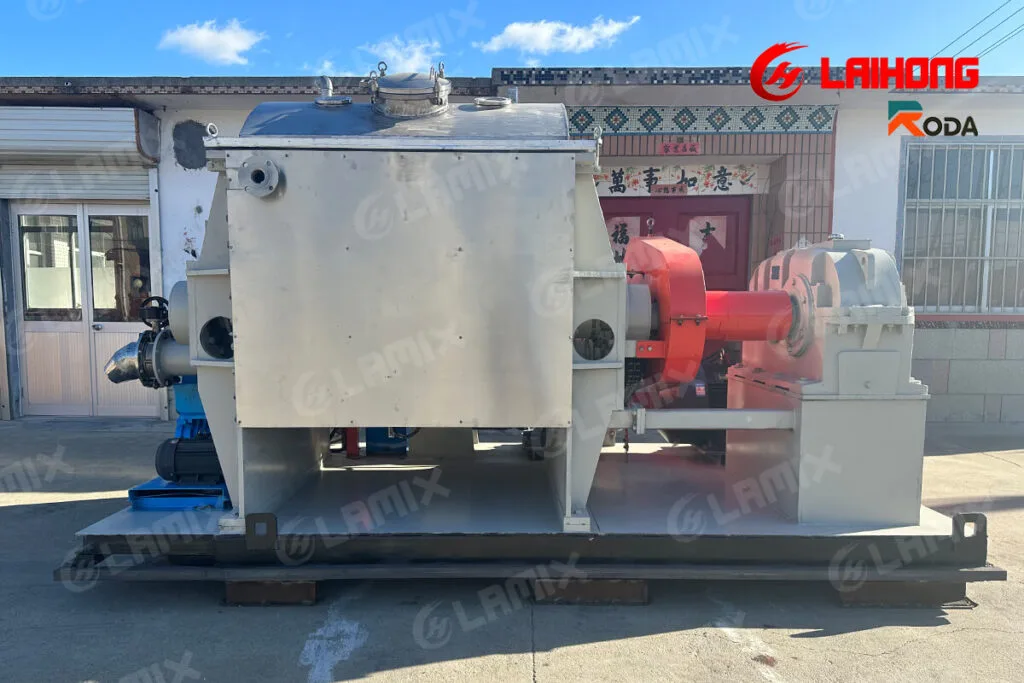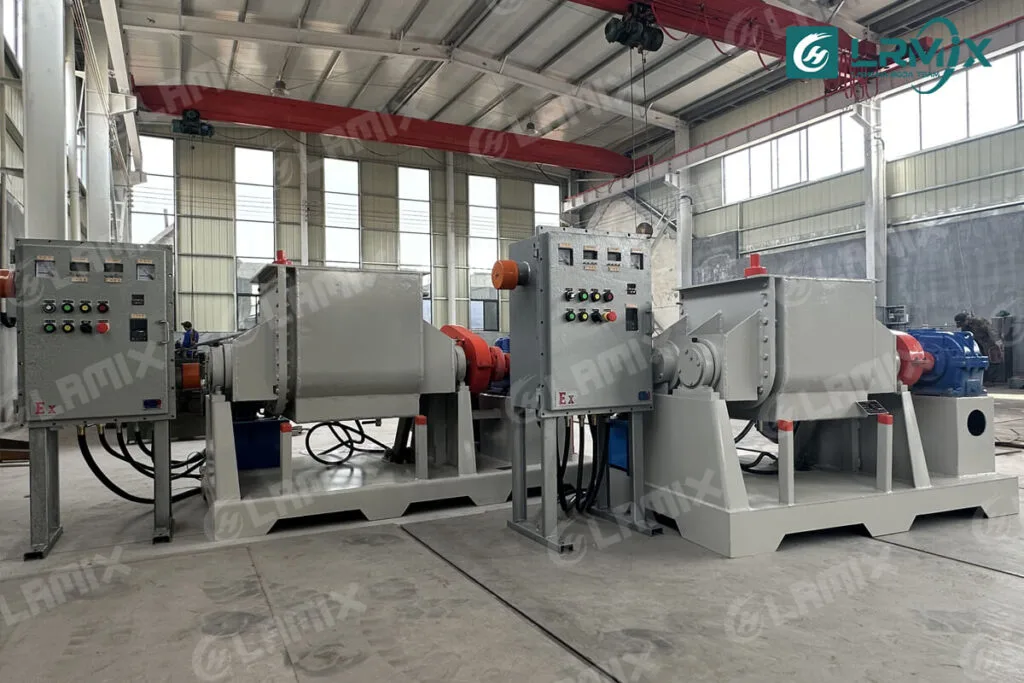
A sigma mixer is an industrial mixing and kneading machine designed for processing high-viscosity, semi-solid, and paste-like materials that are difficult to mix with conventional agitators.
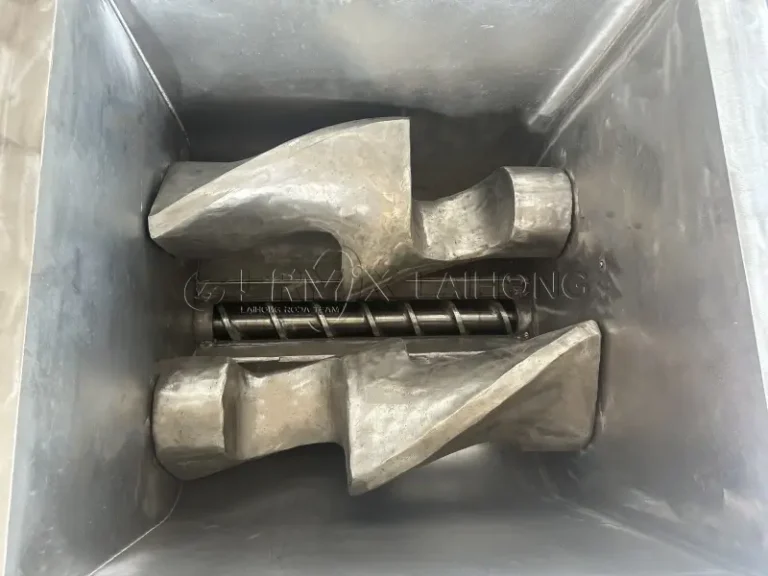
Unlike standard liquid mixers, a sigma mixer uses two specially shaped blades, commonly known as Z-blades or sigma blades, to knead, fold, compress, and shear the material inside a horizontal mixing chamber.
Sigma mixers are widely used for silicone rubber, adhesives, sealants, rubber compounds, ceramic materials, carbon materials, polymers, and other high-viscosity formulations.
What Is a Sigma Mixer?
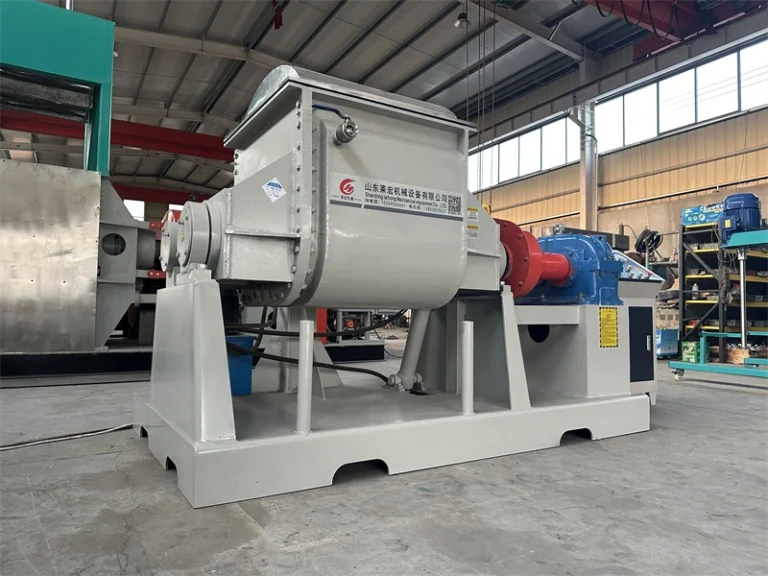
A sigma mixer, also called a sigma kneader or Z-blade mixer, is a heavy-duty industrial mixer designed for high-viscosity materials.
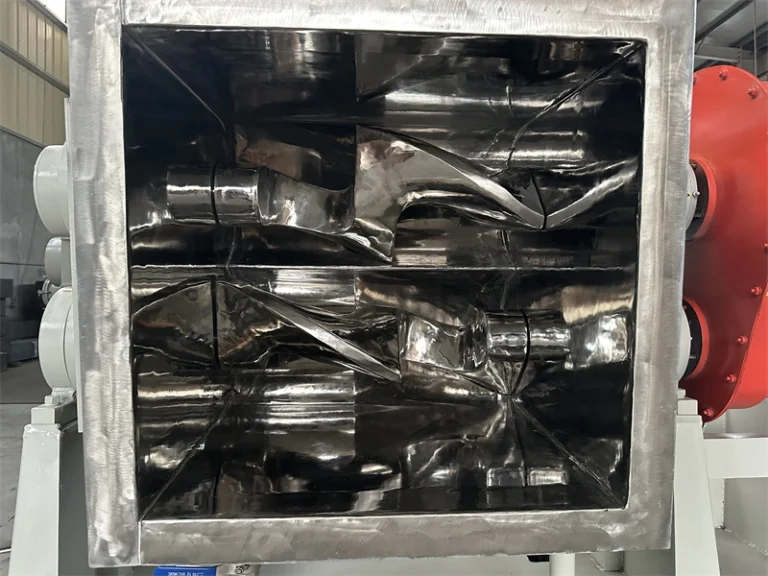
The name “sigma mixer” comes from the characteristic shape of its blades, which resemble the Greek letter sigma (Σ).
The two blades rotate inside a horizontal trough. As the blades rotate, the material is continuously moved through different areas of the mixing chamber.
Instead of simply stirring the material, the blades create a combination of:
- Kneading
- Folding
- Compression
- Shearing
- Material turnover
This makes the sigma mixer particularly suitable for materials that are too thick, sticky, or cohesive for conventional mixing equipment.
How Does a Sigma Mixer Work?
The working principle of a sigma mixer is based on the controlled movement of material between the two rotating blades and the mixing chamber.
As the blades rotate, the material is picked up, compressed, folded, and transferred through the mixing zone.
The continuous movement helps distribute solid and liquid components throughout the batch.
For high-viscosity materials, this type of mechanical action can be more effective than conventional high-speed agitation.
A typical sigma mixer consists of:
- Mixing chamber
- Two sigma-shaped blades
- Drive system
- Gearbox
- Mixing chamber support and frame
- Heating or cooling system when required
- Vacuum system when required
- Discharge system
The exact configuration depends on the material, viscosity, batch size, temperature requirements, and production process.
What Is a Sigma Mixer Used For?
Sigma mixers are mainly used for high-viscosity and semi-solid materials.
Common applications include:
Silicone Rubber
Sigma kneaders are widely used for processing silicone-based materials where strong kneading and controlled temperature are required.
Vacuum configurations can also be used when air removal or degassing is an important part of the process.
Adhesives and Sealants
High-viscosity adhesives and sealants often contain resins, fillers, pigments, and other additives.
A sigma mixer can provide the mechanical force required to incorporate these components into a uniform compound.
Rubber Compounds
Rubber materials can be difficult to process because of their high viscosity and elasticity.
Sigma kneaders can be configured with heating or cooling systems to help control the material temperature during mixing.
Ceramic Materials
Ceramic clay and other ceramic compounds can contain powders, binders, and liquids that require intensive kneading.
Screw extrusion discharge can be used when continuous or controlled discharge of a highly viscous compound is required.
Carbon Materials
Carbon-based pastes and compounds may require strong mechanical mixing to achieve uniform distribution of powders and binders.
The appropriate blade design, motor power, and mixing chamber configuration depend on the specific formulation.
.webp)
Sigma Mixer vs. Conventional Mixer
The main difference is the type of material each machine is designed to process.
| Feature | Sigma Mixer | Conventional Agitator |
|---|---|---|
| Material viscosity | High | Low to medium |
| Material type | Paste, rubber, semi-solid | Liquid and low-viscosity materials |
| Mixing action | Kneading, folding, compression and shear | Mainly circulation and agitation |
| Typical applications | Silicone, rubber, adhesives, ceramics | Paints, liquids, low-viscosity formulations |
| Vacuum option | Available | Depends on design |
| Heating/cooling | Available | Depends on design |
| Discharge | Tilting, screw or other customized systems | Usually bottom outlet |
The correct choice should always be based on the actual material properties and process requirements rather than viscosity alone.
What Factors Should Be Considered When Choosing a Sigma Mixer?
Choosing a sigma mixer requires more than selecting a machine by volume.
Important factors include:
1. Material
What material will be processed?
For example:
- Silicone rubber
- Adhesive
- Sealant
- Ceramic clay
- Rubber
- Carbon paste
- Polymer compounds
Different materials may require different blade configurations and discharge systems.
2. Viscosity
Material viscosity has a major influence on the required motor power, gearbox, blade design, and mixing time.
Very high-viscosity materials may require a stronger drive system and a suitable heavy-duty kneading configuration.
3. Batch Capacity
The nominal volume of a mixer is not necessarily the same as its effective working volume.
The appropriate mixer size should be selected according to the actual batch size, material density, expansion characteristics, and required working volume.
4. Heating or Cooling
Some materials must be heated during mixing, while others require cooling to prevent excessive temperature rise.
The mixing chamber can be configured with a jacket or other temperature-control system depending on the process.
5. Vacuum
A vacuum system may be required for applications where air removal, degassing, moisture reduction, or controlled processing under reduced pressure is important.
6. Discharge Method
Different materials and production processes require different discharge methods.
Common options include:
- Hydraulic tilting discharge
- Screw extrusion discharge
- Bottom discharge
- Customized discharge systems
7. Construction Material
The wetted parts may be manufactured from stainless steel or other materials depending on the chemical characteristics of the product.
Material compatibility should be evaluated before finalizing the equipment configuration.
What Is the Difference Between a Sigma Mixer and a Sigma Kneader?
In industrial equipment terminology, the terms “sigma mixer” and “sigma kneader” are often used to describe very similar types of equipment.
“Sigma mixer” emphasizes the mixing function, while “sigma kneader” emphasizes the kneading action used for high-viscosity materials.
The exact machine configuration can vary between manufacturers.
For high-viscosity applications, a sigma kneader may include additional features such as:
- Vacuum
- Heating
- Cooling
- Hydraulic tilting
- Screw extrusion discharge
- Customized blade configurations
Sigma Mixer Configurations
A sigma mixer does not have to be a single standardized machine.
Depending on the process, it can be configured as:
Standard Sigma Mixer
Suitable for general high-viscosity mixing and kneading applications.
Vacuum Sigma Kneader
Designed for applications where vacuum processing or degassing is required.
Heating/Cooling Sigma Kneader
Used when the material temperature must be controlled during mixing.
Hydraulic Tilting Sigma Kneader
Allows the mixing chamber to tilt for easier discharge and cleaning.
Screw Extrusion Kneader
Uses a screw discharge system for controlled extrusion of highly viscous materials.
Why Is Sigma Mixer Configuration Important?
The same nominal mixer volume can perform very differently depending on the material and configuration.
For example, a 100 L mixer used for a relatively soft compound may require a different drive and discharge system from a 100 L mixer used for a highly viscous ceramic compound.
Therefore, industrial sigma mixer selection should be based on:
Material + Viscosity + Batch Size + Temperature + Vacuum Requirement + Discharge Method
rather than capacity alone.
LRMIX Sigma Mixers and Kneaders
LRMIX manufactures industrial sigma kneaders and mixers for high-viscosity and semi-solid materials.
The equipment can be configured according to the customer’s material, viscosity, batch capacity, temperature requirements, vacuum requirements, and discharge method.
Typical configurations include:
- Sigma kneaders
- Hydraulic tilting kneaders
- Vacuum kneaders
- Heating and cooling kneaders
- Screw extrusion kneaders
LRMIX also manufactures other industrial mixing equipment, including high-speed dispersers, planetary mixers, ribbon mixers, and multi-shaft mixers.
Frequently Asked Questions
What is a sigma mixer used for?
A sigma mixer is mainly used for high-viscosity, semi-solid, paste-like, and difficult-to-mix materials such as silicone rubber, adhesives, sealants, rubber compounds, ceramic materials, and carbon-based compounds.
Why does a sigma mixer use two blades?
The two sigma-shaped blades create continuous kneading, folding, compression, and shearing actions that help process high-viscosity materials.
Can a sigma mixer operate under vacuum?
Yes. A sigma mixer can be configured as a vacuum kneader when the process requires degassing or vacuum processing.
Can a sigma mixer heat or cool the material?
Yes. Depending on the application, the mixing chamber can be equipped with heating or cooling systems for temperature control.
How do I choose the right sigma mixer?
The main factors include material type, viscosity, batch size, working volume, temperature requirements, vacuum requirements, discharge method, and required motor power.
AT THE END
A sigma mixer is a specialized industrial mixing and kneading machine designed for materials that are too viscous or cohesive for conventional mixers.
Its Z-shaped blades provide continuous kneading, folding, compression, and shearing, making the equipment suitable for applications including silicone rubber, adhesives, sealants, rubber compounds, ceramics, and carbon materials.
The right sigma mixer configuration depends on the complete process rather than capacity alone.
If you are selecting a sigma mixer, providing the material, viscosity, required batch capacity, temperature range, and discharge requirements will help determine the appropriate equipment configuration.
Need help selecting a sigma mixer? Contact LRMIX with your material, viscosity, and required batch capacity.