When your factory handles materials like silicone rubber, HTV/RTV silicone gel, or butyl sealants, you are not just “stirring” components. You are dealing with a dense, stubborn mass that fights back against the mixing blades.
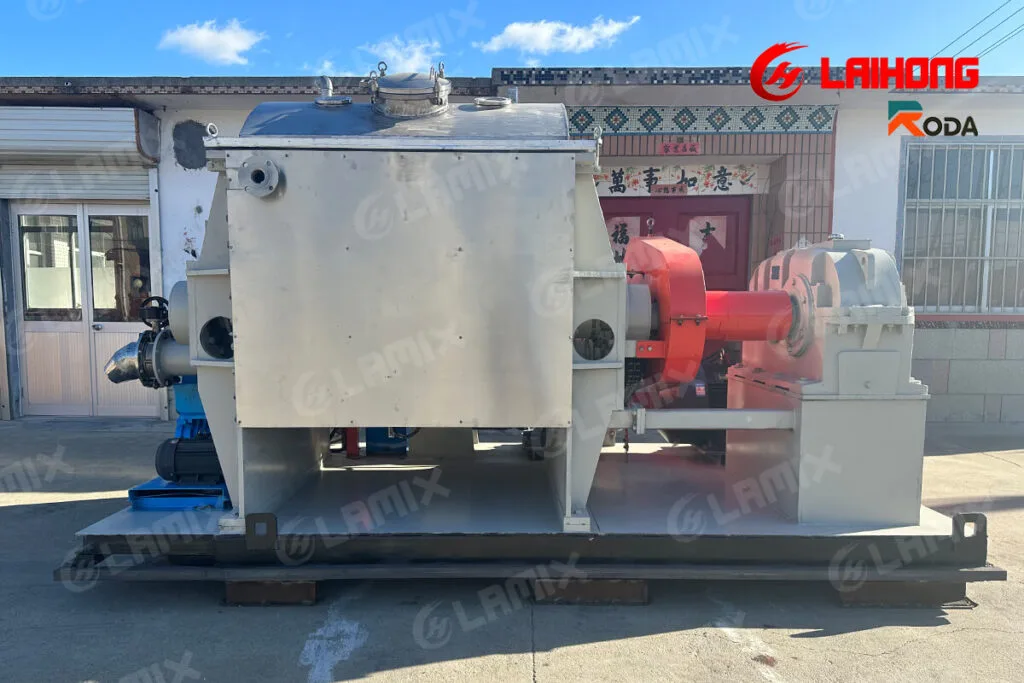
Standard mixers or low-torque blenders quickly reach their mechanical limits when processing high-viscosity formulations. If the equipment lacks raw shearing power, you end up with filler clusters, soft spots, or uneven curing agent distribution. For international buyers looking to scale up from pilot lines to mid-size industrial outputs, a 620L Hydraulic Tilting Sigma Kneader Mixer offers the practical balance of capacity, blending force, and clean discharge.
Understanding the 620L and 500L Scale: Transitioning from Pilot to Steady Production
Many silicone sealant factories start their trials with small lab-scale mixers. However, expanding production is never as simple as buying a larger tank. In high-viscosity chemical processing, material behavior changes drastically once the batch size exceeds a few hundred liters.
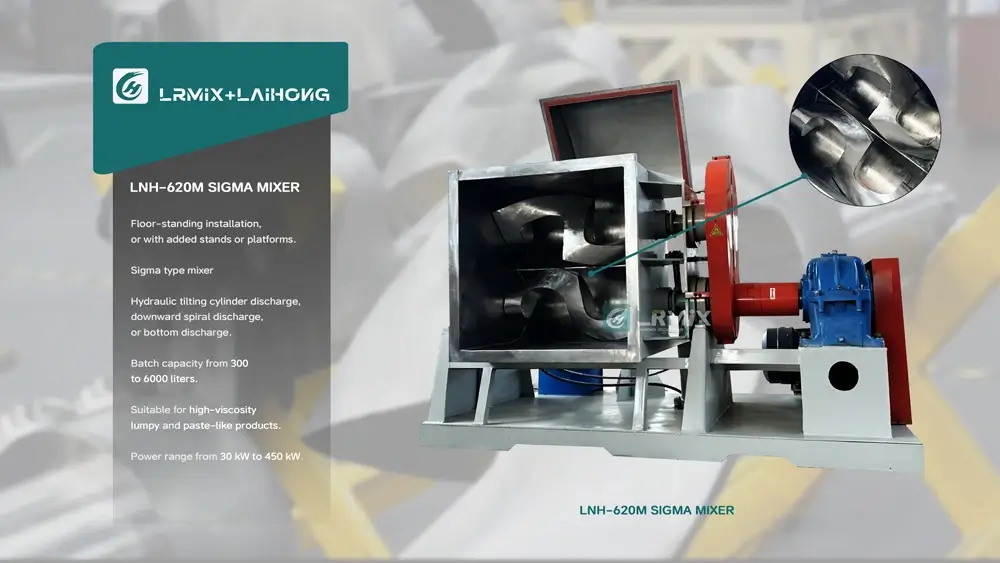
For operations targeting consistent regional supply, intermediate capacities like 500 Liters or 620 Liters provide excellent flexibility.
- Our 500L Sigma Kneader Machine is frequently selected by companies specializing in custom-color silicone compounds or high-performance rubber additives where batch flexibility is essential.
- Moving up to the 620L Sigma Mixer, factories gain a higher daily throughput without requiring massive plant floorspace or overly complex infrastructure updates. It acts as the ideal workhorse for mid-to-large-scale silicone production.
The Crucial Role of Vacuum Degassing in Silicone Compounding
Silicone rubber compounding is highly sensitive to trapped air. During the raw feeding phase—when fumed silica, polymers, and plasticizers are dumped into the chamber—air pockets naturally form inside the dense paste.
If these bubbles are not eliminated during the kneading stage, they remain trapped inside the final compound. For downstream operations, this leads to structural voids, poor surface finish on extruded profiles, or erratic density properties.
A proper Vacuum Sigma Kneader seals the chamber completely, pulling a deep vacuum while the heavy Z-blades fold and stretch the material. By exposing new surface areas of the silicone paste to the vacuum environment repeatedly, the machine forces micro-bubbles to rise and escape. This degassing process isn’t a premium feature; it is an absolute necessity if you intend to pass strict industrial quality audits.
Hydraulic Tilting vs. Product Residue: Solving the Discharge Bottleneck
Silicone gel and butyl compounds are notoriously sticky. They don’t flow like water or slide out like dry powders. Once a 620-liter batch is fully mixed and uniform, getting it out of the machine without wasting raw materials or spending hours on manual scraping becomes the next factory bottleneck.
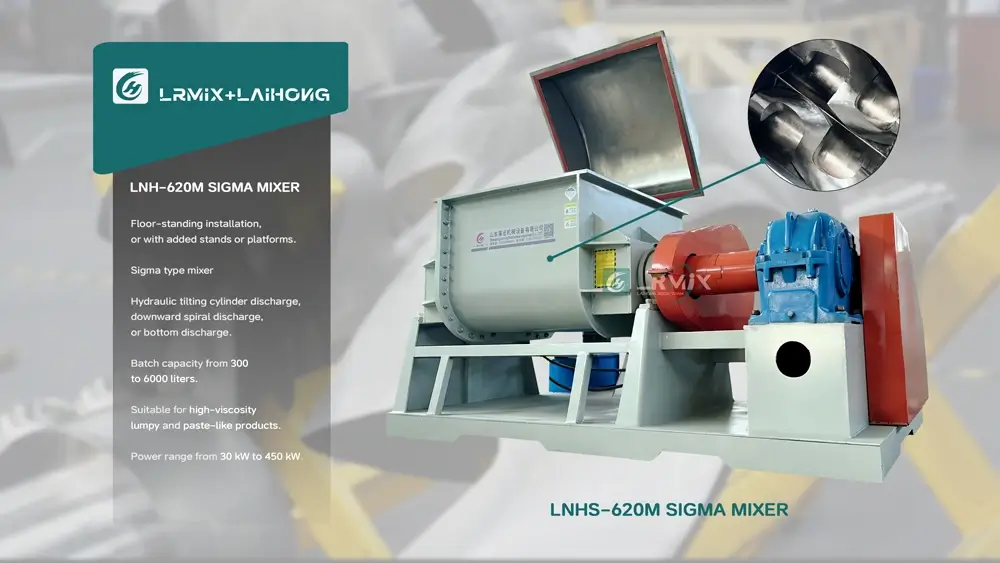
This is why our 620L Silicone Kneader Mixer utilizes a reinforced hydraulic tilting mechanism.
Effortless Unloading: Instead of relying on manual labor, heavy-duty hydraulic cylinders smoothly rotate the entire mixing trough up to 90 degrees or more.
Maximum Yield: As the chamber tilts, the Z-blades can be run in reverse at low speed, actively “pushing” the heavy silicone paste out into collection carts or downstream processing gear.
Easier Cleaning: A fully tilted chamber gives your operators direct, comfortable access to the underside of the blades and the bottom of the trough, reducing downtime between color changes or formulation shifts.
Key Technical Details That Build Factory Confidence
When reviewing quotes for heavy machinery, the structural details determine whether the equipment runs for a decade or breaks down during a peak production season:
Heavy Shear Z-Blades: Machined from cast steel with wear-resistant cladding, the dual sigma blades rotate at differential speeds, creating a relentless pulling, folding, and compressing effect.
Jacketed Temperature Management: Silicone mixing generates substantial internal friction heat. Our chambers feature a full jacket design adaptable for thermal oil heating, steam heating, or intense water cooling to keep your compounds within the safe curing temperature window.
Robust Sealing Systems: High vacuum requires precision engineering. Multi-layer vacuum packing glands and mechanical seals ensure that external air stays out, and valuable raw materials stay in.
What to Confirm Before Placing Your Equipment Order?
A sigma kneader is a long-term capital investment for your workshop. Before finalizing your technical specifications, we always recommend verifying these practical factors with our engineering team:
Your Exact Material Viscosity: Is your formulation closer to a self-leveling gel, a thick paste, or a semi-solid rubber block?
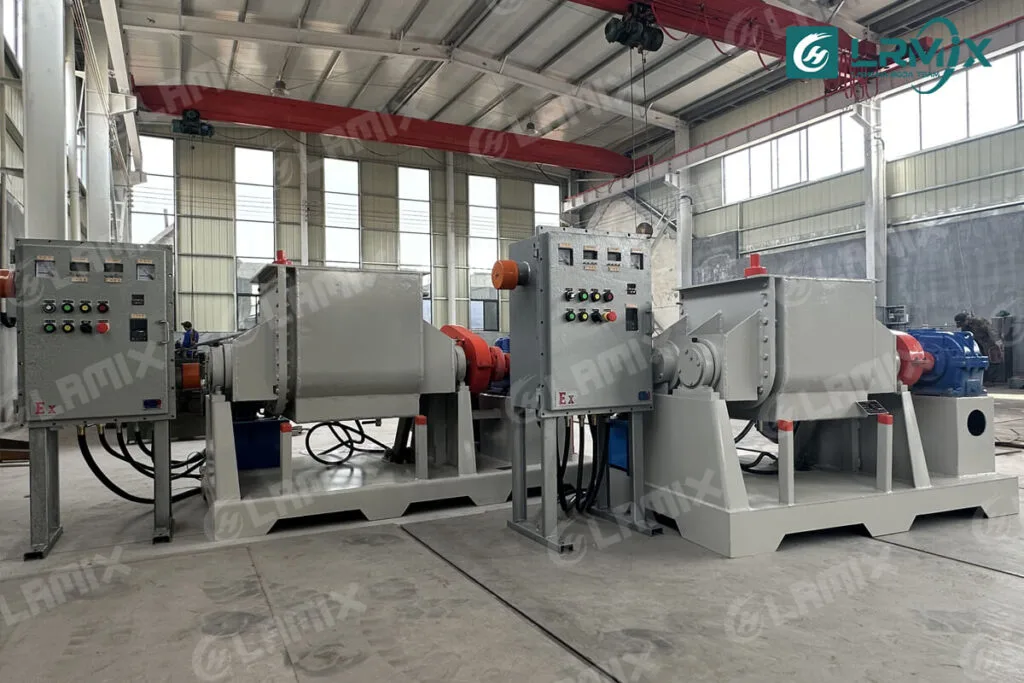
Your Plant Safety Requirements: Does your production area handle volatile solvents that require full explosion-proof (Ex-proof) motors and control panels?
Your Preferred Heating Method: Does your factory already have a central steam line, or do you require independent electric thermal oil jackets?
By analyzing these variables upfront, we ensure that your 620L or 500L Sigma Kneader Mixer arrives at your facility fully optimized for your specific silicone application from day one.
For more technical specifications of our mixing equipment, feel free to contact LRMIX at info@lrmixer.com.