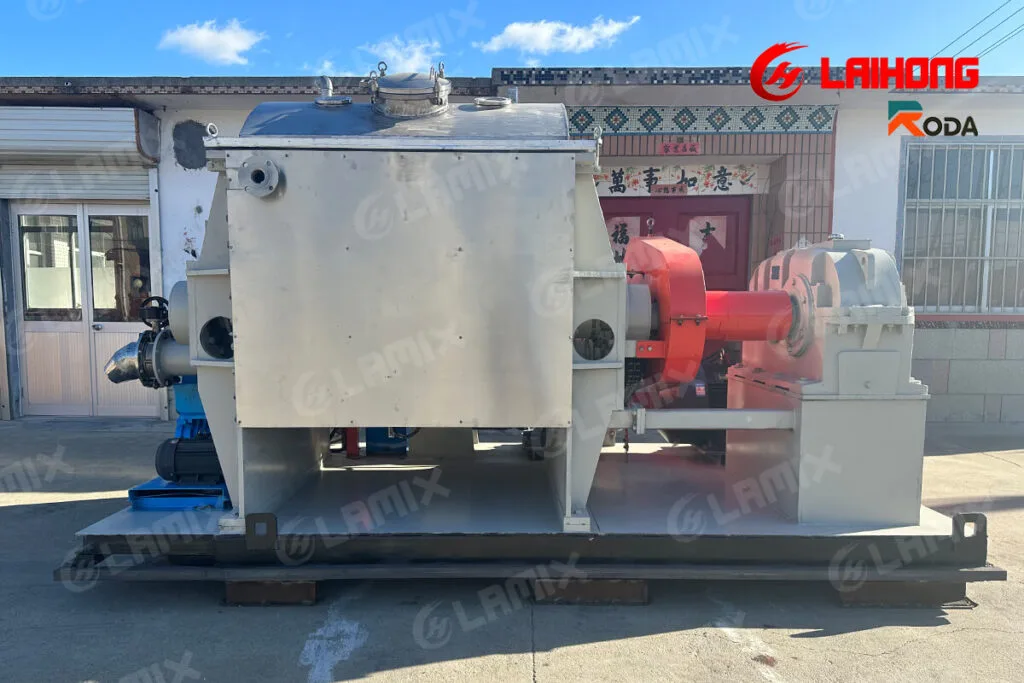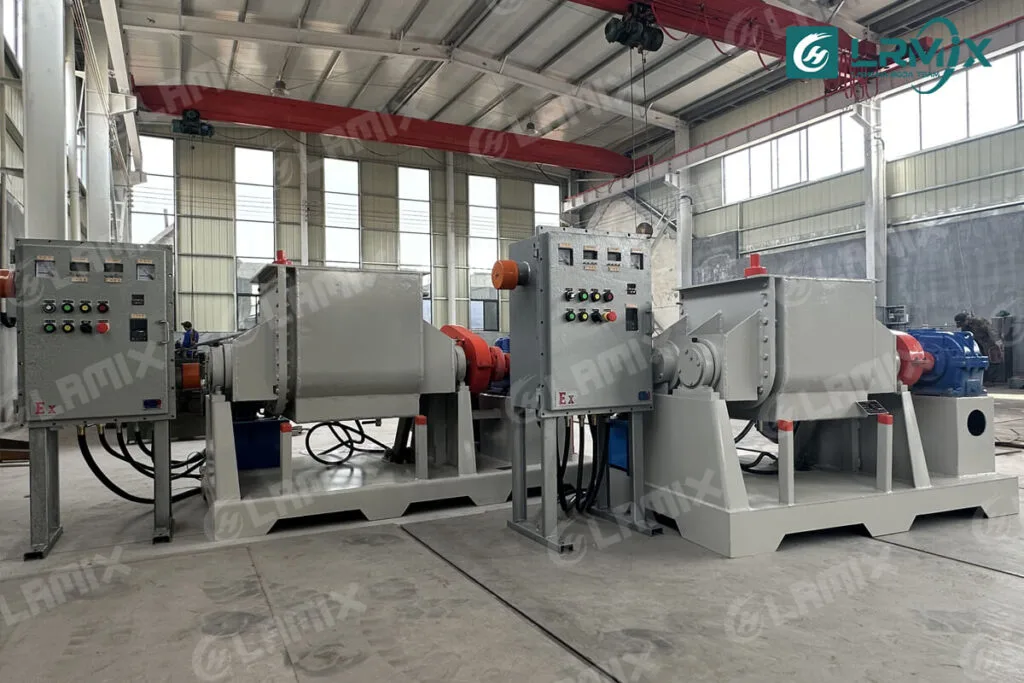
A returning customer has placed a second order with LRMIX — two more 100L Screw Extrusion Kneaders, bringing their total to four units of the same configuration. Both new machines are built to the identical single-jacket, screw-discharge spec as the first two, used for ceramic clay mixing. The customer didn’t request any changes to the setup.
Why the Customer Reordered
Ceramic clay isn’t forgiving material. Uneven mixing shows up later in the process — in firing, in shrinkage, in surface consistency — and by then it’s expensive to trace back. The customer’s first two units had been running on this exact problem: getting dense, high-viscosity clay mixed evenly and discharged cleanly without material hanging up in the trough.
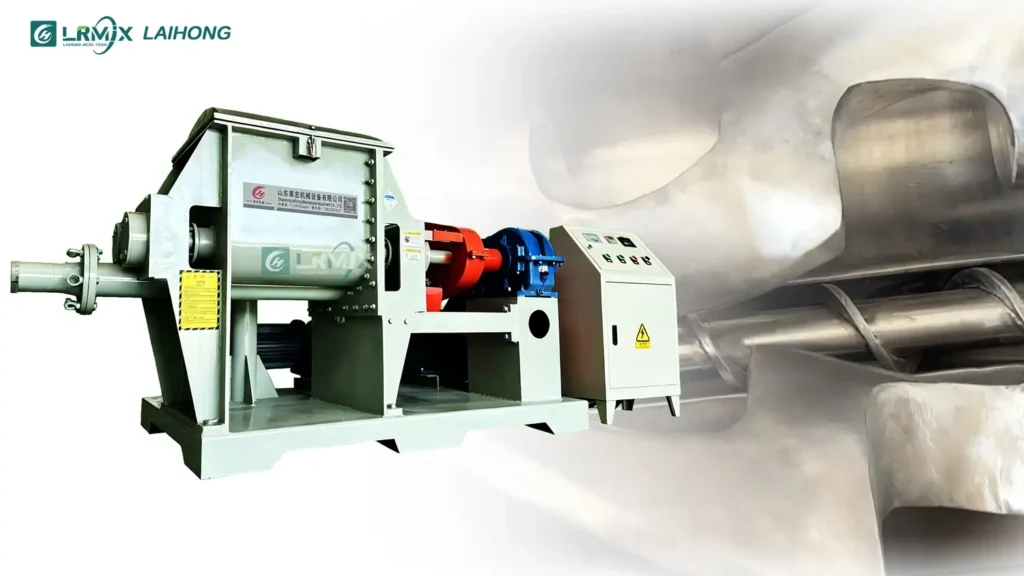
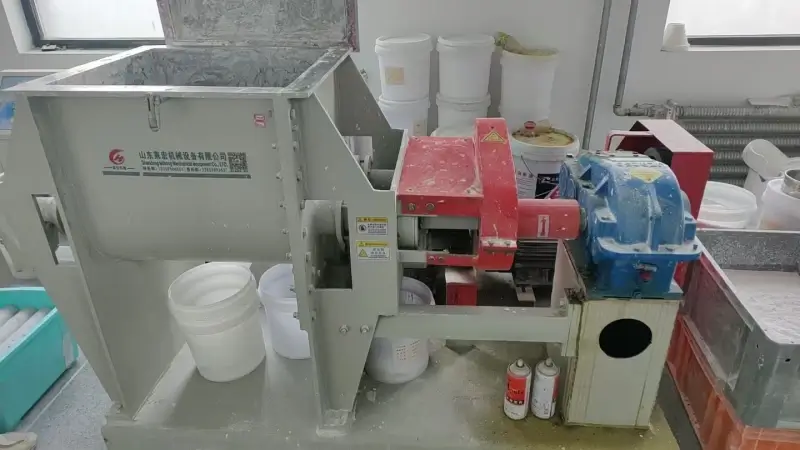
The configuration that solved it was straightforward. A 100L capacity matched their batch size without over- or under-running the motor. A single-layer trough kept the build simple — no jacket to maintain, no vacuum system to seal and monitor, since neither was needed for this material. And screw extrusion discharge meant the finished clay came out through the outlet on its own, rather than requiring the chamber to be tilted or scraped by hand.
When it came time to expand capacity, the customer didn’t ask for a different setup. They asked for two more of the same machine.
Why Two Units Instead of One
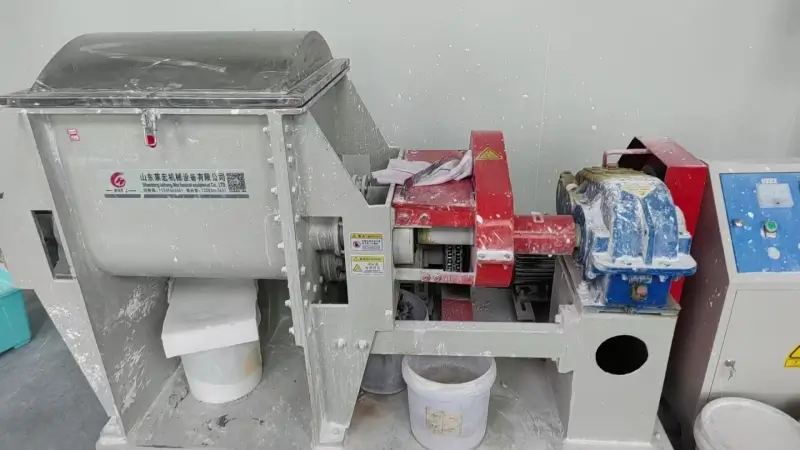
Running two 100L Screw Extrusion Kneaders side by side, rather than one larger unit, gives the customer’s line something a single big machine can’t: if one kneader is down for maintenance or a batch changeover, the other keeps running. For a production schedule built around continuous batches, that kind of redundancy matters more than raw single-batch volume. It also means each machine stays sized to a batch the motor and screw discharge can handle cleanly, instead of scaling up into a larger, harder-to-maintain unit.
Technical Highlights
- Single-jacket, single-layer trough — a simpler structure than jacketed or vacuum-rated versions, with fewer components to maintain and fewer points where a seal or fitting can fail
- Screw extrusion discharge — pushes dense, high-viscosity clay out through the outlet under continuous force, instead of relying on gravity or manual scraping, which leaves less material behind in the chamber between batches
- Non-vacuum configuration — appropriate for ceramic clay, which doesn’t require air removal during mixing the way some adhesive or sealant formulations do, keeping the build lighter and the operation simpler
- Consistent shear across the batch — the kneading action reaches material throughout the trough rather than concentrating force near the blades, which is what uneven ceramic mixes usually come down to
- Repeatable build — because the spec hasn’t changed across two orders, the customer’s operators are already trained on the machine and maintenance parts are already stocked, which shortened this second order’s lead time
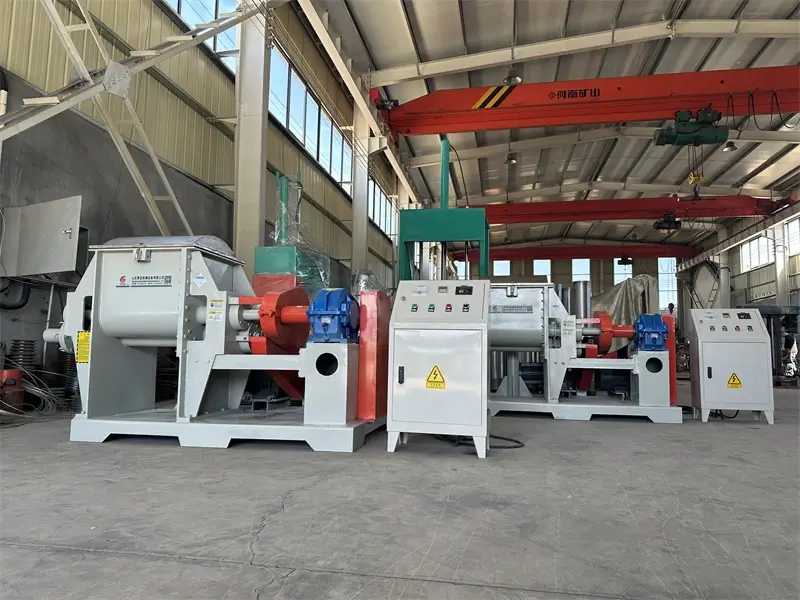
A second order for the same unchanged spec, doubling the fleet from two units to four, is a fairly plain signal — the machines did what they were supposed to do the first time. If you’re processing ceramic clay, technical ceramics, or a similarly dense, high-viscosity material and need a mixing setup that discharges cleanly without a lot of extra equipment to maintain, get in touch with LRMIX’s engineering team to talk through the configuration.