
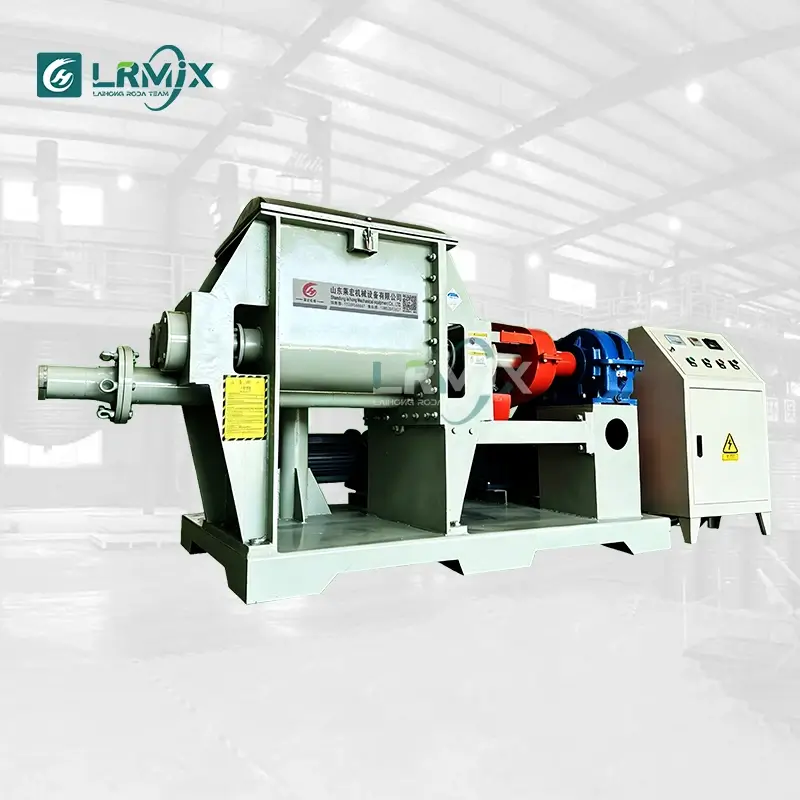
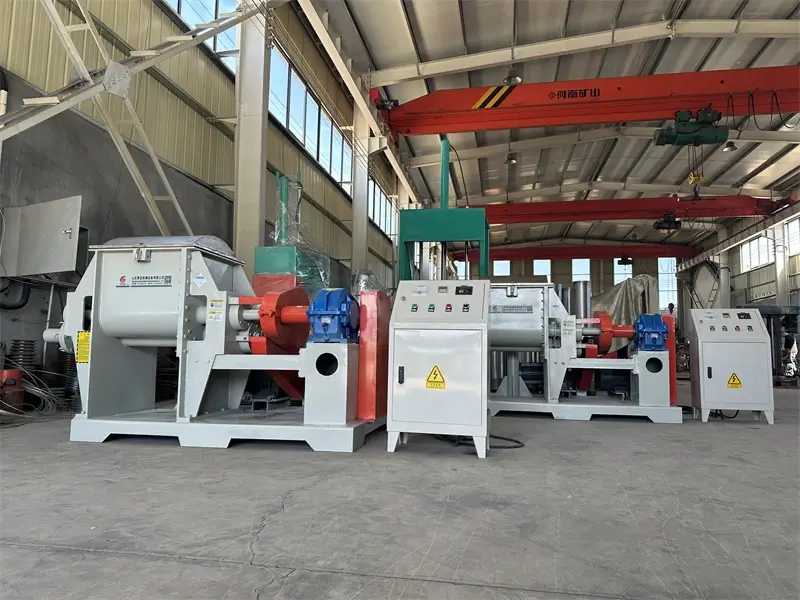
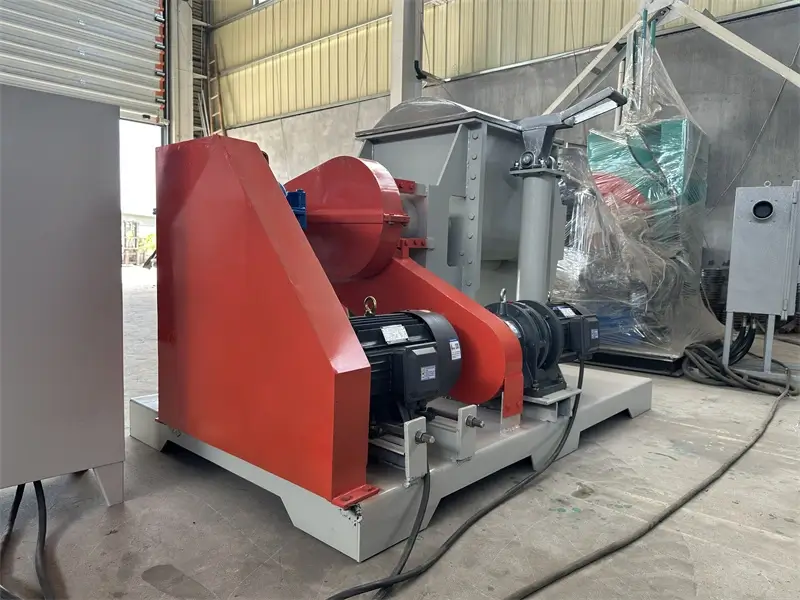
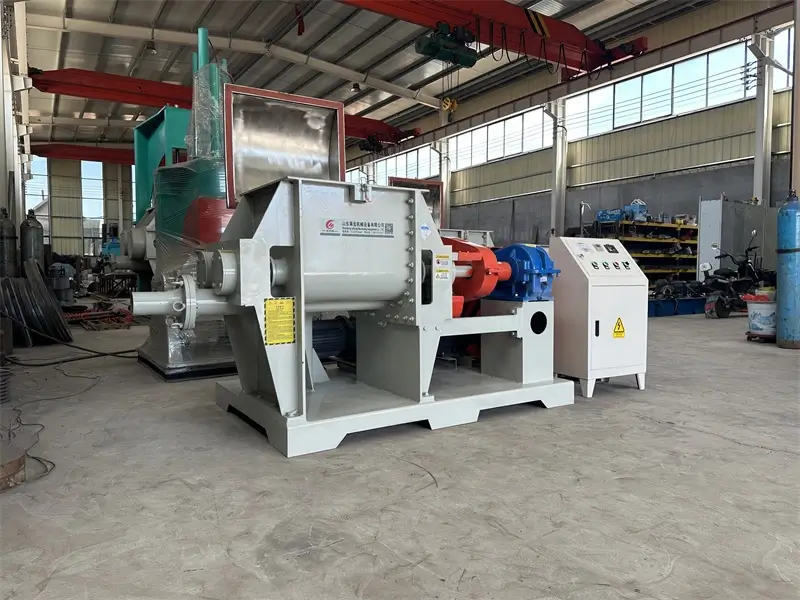
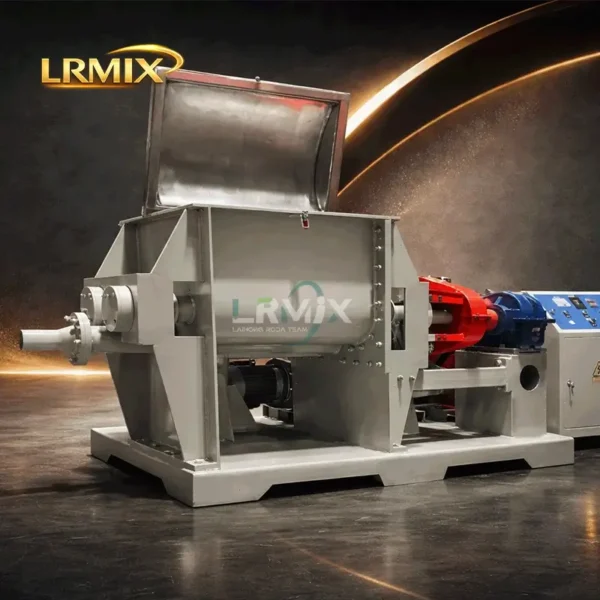
The LRMIX 100L Single Screw Kneader uses a single-screw kneading action to process medium-to-high viscosity materials such as ceramic powder, clay and other paste-like compounds. A 7.5kW main motor drives the kneading screw, while an independent 4kW screw discharge motor pushes the finished batch out automatically — no tilting or manual scraping required. Contact parts are 304 stainless steel, and motor power is sized to the material’s actual viscosity rather than fixed to a single standard configuration.
A Single-Screw Kneading Solution for Ceramic Clay and Paste Processing
This 100L single screw kneader works through continuous compression, shear and turnover as the screw rotates, kneading ceramic powder, clay and similar medium-to-high viscosity materials into a uniform batch. The 7.5kW main motor handles the core kneading work, while a separate 4kW motor drives the discharge screw, extruding the finished material through the outlet once mixing is complete — there’s no need to tilt the chamber or scrape material out by hand, which keeps both operation and cleanup simpler. Motor power on both the main and discharge drives isn’t fixed — we size it to the customer’s actual material viscosity, since higher-viscosity materials need more torque and power to process properly.
Common Challenges in Ceramic Clay Kneading
Clay-type materials vary batch to batch in moisture content and particle size, making it hard for standard mixers to deliver consistent results.
High-viscosity, dense material doesn’t move well under gravity or tilting alone, and often gets left behind in the chamber.
A fixed motor spec applied across different material viscosities either wastes energy on light materials or overloads the motor on heavier ones.
Complex chamber geometry can leave dead zones during cleanup, risking cross-contamination between batches.
Why Choose This Screw Kneader
The rotating screw applies continuous compression, shear and turnover, suited to uniform kneading of ceramic powder, clay and similar medium-to-high viscosity materials.
An independent 4kW motor drives the discharge screw, extruding material directly once kneading is done — faster and less labor-intensive than tilting or manual scraping.
Main and discharge motor power are engineered around your actual material viscosity, not applied as a one-size-fits-all standard, so torque matches the real process load.
Corrosion-resistant and easy to clean, suited to ceramic and clay applications with moderate purity requirements.
Sized for small-to-medium batch production or pilot-scale runs, without over-investing in a larger machine than the output actually requires.
How Does a Screw Kneader Work?
See It Running
This short video shows the LRMIX 100L single screw kneader in operation — the kneading action, screw discharge, and overall build. It’s the same unit described on this page, filmed on our production floor rather than staged for demonstration.
Technical Parameters
Note: model range shown for reference — motor power is engineered around your actual material viscosity, so contact us to confirm specifications for your application.
| Model | Volume (L) | Main Motor (kW) | Discharge Motor (kW) | Discharge Type | Contact Material |
|---|---|---|---|---|---|
| SK-50 | 50 | 5.5 | 3 | Screw Discharge | SS304 |
| SK-100 | 100 | 7.5 | 4 | Screw Discharge | SS304 |
| SK-200 | 200 | 15 | 5.5 | Screw Discharge | SS304 |
| SK-500 | 500 | 22 | 7.5 | Screw Discharge | SS304 |
Applications
Widely used for kneading medium-to-high viscosity materials, including:
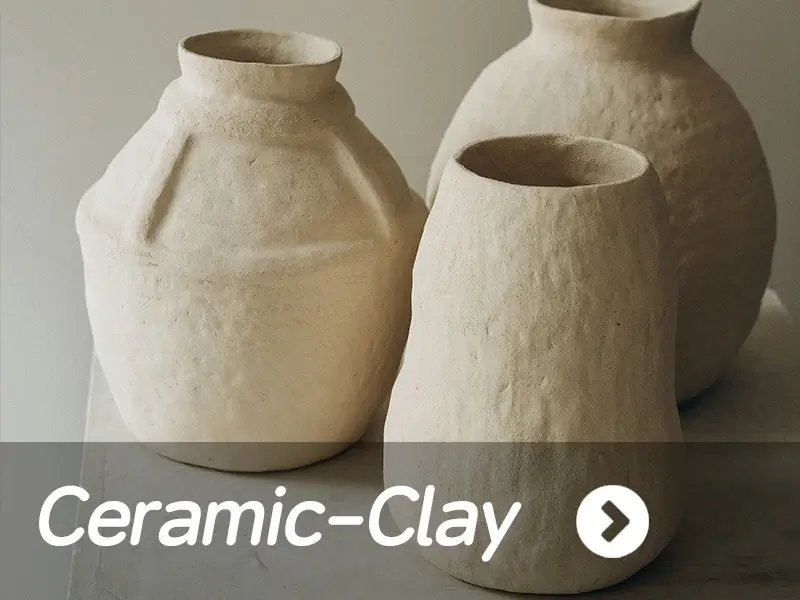
Ceramic Powder & Clay
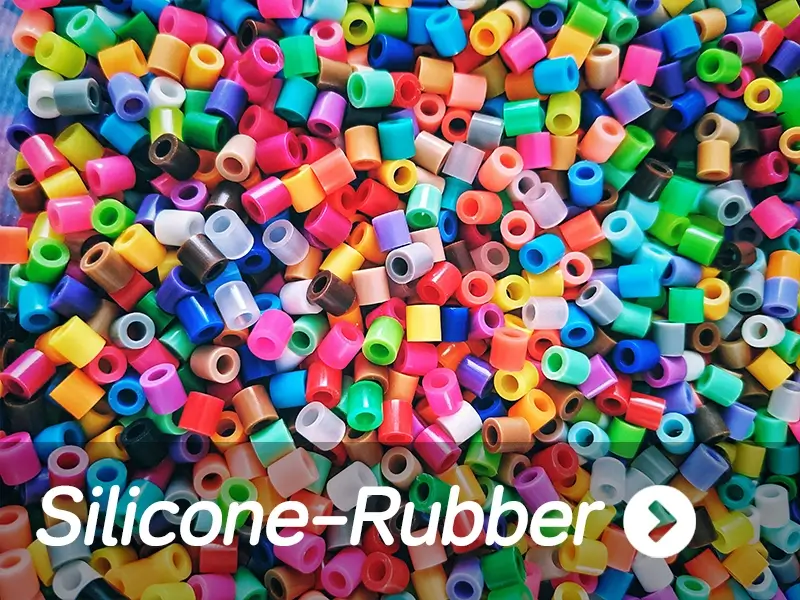
Silicone Rubber & Sealants

Chewing Gum & Confectionery Paste
FAQ
Q1. Is 100L the total volume or the effective working capacity?
Effective working capacity is typically 60–80% of total volume, and can be adjusted depending on the specific material’s characteristics.
Q2. Is the 7.5kW main motor enough for my material?
This rating is sized for standard clay and ceramic powder viscosity. If your material is notably higher in viscosity, we’ll recalculate motor power rather than default you to the standard configuration.
Q3. Why screw discharge instead of tilting the chamber?
Screw discharge is more efficient for high-viscosity, dense materials and avoids the extra tilting mechanism — a simpler structure with fewer points of failure.
Q4. Can the contact parts be made from a different material?
Standard configuration is 304 stainless steel. If your process requires stronger corrosion resistance, 316L stainless steel can be substituted.
Q5. Is this a single-screw or double-screw kneader?
This is a single-screw design, not a twin Z-blade (sigma) kneader. A single screw is well suited to continuous extrusion-style kneading.
Need a screw kneader sized to your material’s viscosity?


Reviews
There are no reviews yet.