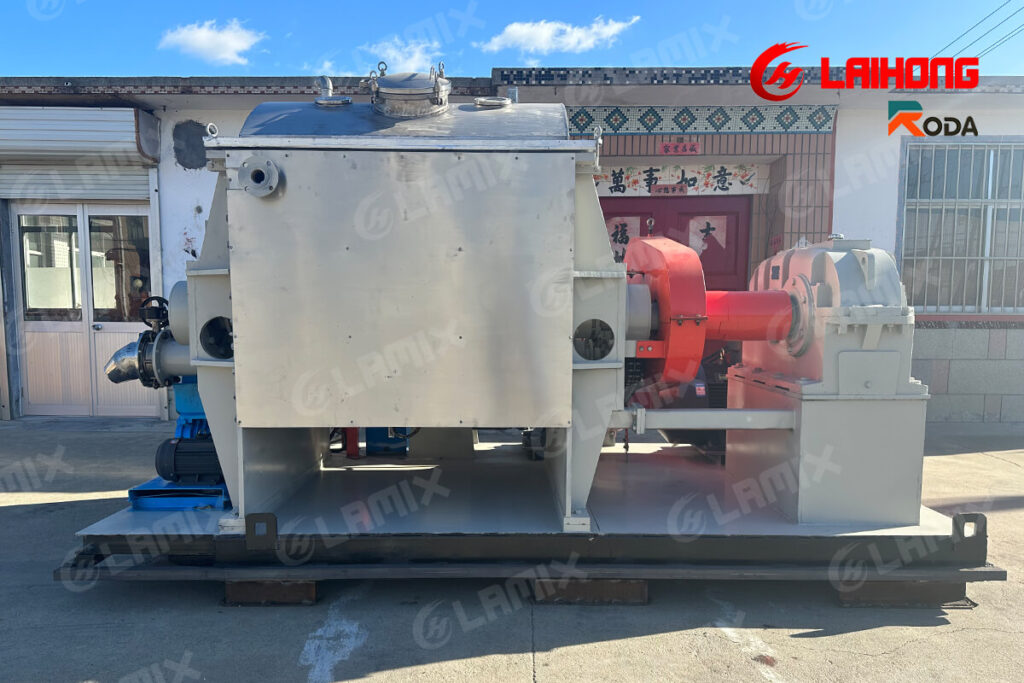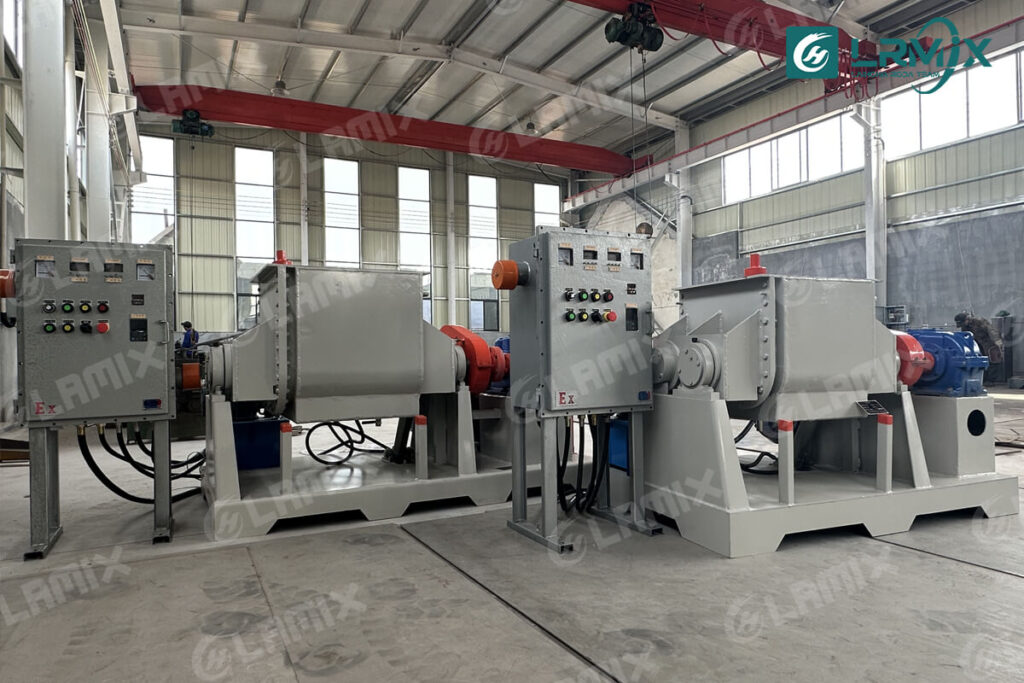
LRMIX has recently completed the production and shipment of a 5000L horizontal double ribbon mixer for a customer in Malaysia, an agrochemical manufacturer. The machine is built to handle copper sulfate pentahydrate (CuSO₄·5H₂O) — a crystalline material that needs dust kept under control and shouldn’t be broken down too much during mixing. For this application, we specified 316L stainless steel contact parts across the board; the standard carbon steel build isn’t well suited to prolonged contact with sulfate-based material.
How the Double Ribbon Design Changes Mixing Time
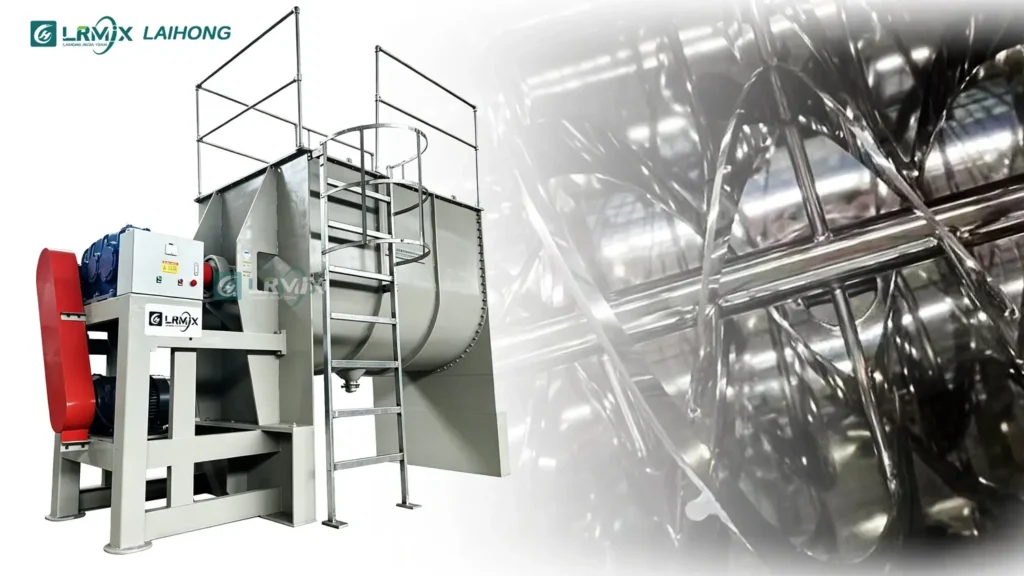
Inside the trough sit two ribbons — the outer one pushes material from both ends toward the center, the inner one pushes it back out. Two opposing directions running at once create continuous convection. Compared to a single ribbon, this noticeably cuts the time it takes to reach uniform mixing — single ribbon setups tend to leave material sitting fairly still at both ends of the trough, and the double ribbon largely avoids that. For a crystalline material like copper sulfate pentahydrate, shorter mixing time has a side benefit too: fewer passes under the ribbon means less crystal breakage.
Why This Material Called for 316L Instead of Standard Carbon Steel
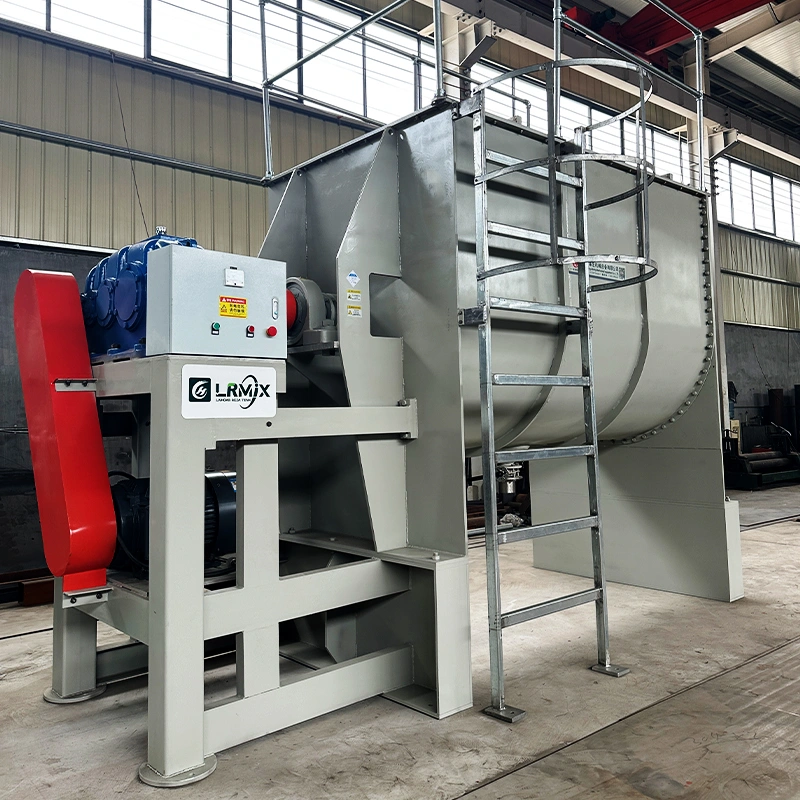
Copper sulfate storage and processing equipment is generally built in stainless steel, and galvanized piping or anything reducing needs to stay away from it to avoid corrosion or unwanted reactions. The customer’s technical spec called out contact material directly, and we went with 316L mainly for long-term corrosion stability under continuous batch production — this wasn’t a one-off project, so the material choice needed to hold up over time.
How the Motor and Gearbox Were Sized
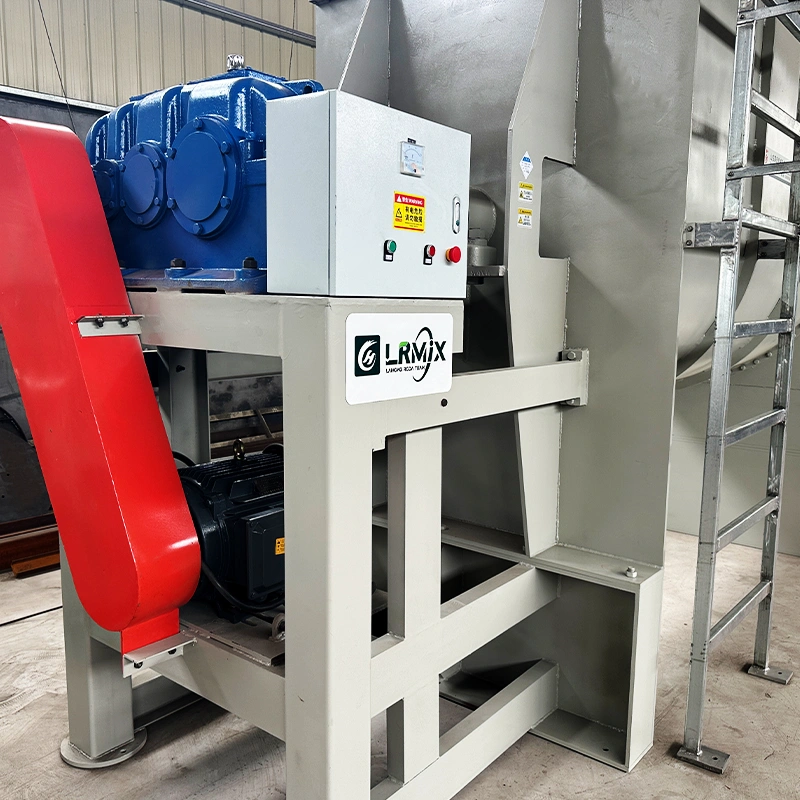
37kW motor, belt-driven, paired with a ZLY-250 hardened-tooth-surface gearbox. That power rating matches the full 5000L load. Compared to a standard cycloidal gearbox, the hardened-tooth version runs quieter and wears less under continuous operation — for a customer running this in ongoing batch production rather than intermittent use, that’s the standard sizing logic, not a special customization.
What We Usually Need Upfront for a Similar Project
- Target batch volume and annual output
- Material form (powder, granule, or mixed) and whether it tends to clump
- Required contact material (carbon steel, 304, or 316L)
- Whether temperature control is needed (heating or cooling jacket)
- Whether enclosed loading is needed (vacuum system)
- On-site power supply and installation space
The unit is running on the customer’s line now. We’ll follow up with production data if there’s anything worth sharing later.