
Industry Application

Chewing Gum Mixer Kneader

Sigma Kneaders for Gum Base Compounding & Chewing Gum Production

The sigma kneader — also called a Z-blade or double-arm kneader mixer — is the universally adopted equipment for chewing gum and bubble gum manufacturing. Its counter-rotating sigma blades generate the simultaneous shearing, compression, folding and kneading action required to blend gum base, sweeteners, softeners and flavourings into a homogeneous, elastic mass. Unlike planetary mixers or paddle blenders, the sigma kneader is specifically designed for the extremely high-viscosity, sticky nature of gum base — a material that would stall or damage any conventional mixing equipment.

Understanding Chewing Gum: What Is Being Mixed?

Chewing gum is a complex food product built around a non-digestible, elastic gum base, into which sweeteners, flavours, softeners and functional ingredients are uniformly incorporated. The quality of the finished gum — its texture, elasticity, chew duration and flavour release profile — depends directly on the uniformity of mixing and the precision of temperature control during the kneading process.

Modern chewing gum formulations are classified into two main categories: sugar-containing gum, which uses sucrose and glucose syrup as primary sweeteners, and sugar-free gum, which relies on polyol sweeteners such as sorbitol, xylitol, maltitol and isomalt. Sugar-free formulations are considerably more sensitive to process parameters — temperature deviations and incomplete mixing produce noticeable textural defects.

Gum Base (20–30%) The non-digestible elastic core — a blend of elastomers (natural or synthetic), resins, waxes, fats and emulsifiers. Extremely high viscosity; must be pre-softened before mixing
Sweeteners (50–60%) Sucrose and glucose syrup in conventional gum; sorbitol, xylitol or maltitol in sugar-free formulations. Sorbitol also acts as a softener and humectant
Softeners & Plasticisers (2–15%) Glycerin, lecithin, hydrogenated vegetable oils and mono/diglycerides — control the pliability, cohesiveness and moisture retention of the finished gum
Flavourings (1–3%) Natural or artificial flavour compounds — mint, fruit, menthol, spearmint. Added at the end of mixing when temperature has dropped to preserve volatile aroma compounds
Functional Ingredients Whitening agents (calcium carbonate, titanium dioxide), breath fresheners, vitamins, caffeine, tooth-whitening compounds and other active ingredients in speciality formulations
Coating Materials Not mixed in the kneader — sugar or polyol coatings are applied in separate coating pans after the gum mass has been extruded, scored and conditioned

Chewing Gum Production Process: The Role of the Sigma Kneader

Industrial chewing gum manufacturing follows a defined sequence from gum base preparation through to final packaging. The sigma kneader is central to two of the most critical stages: gum base compounding and gum mass preparation. According to industry practice documented by confectionery equipment specialists, the final gum mass temperature must not exceed 55°C to preserve flavour compounds and maintain correct textural properties.

1
Gum base pre-softening Block or pellet gum base is pre-heated in a temperature-controlled cabinet or warming room to 50–60°C to reduce viscosity before loading. Some formulations use the kneader jacket (steam or hot water at 60–70°C) to achieve the required softening temperature during the initial mixing phase. Never add cold, hard gum base — it will overload the drive system.
2
Load gum base into sigma kneader Pre-softened gum base is charged into the jacketed mixing chamber. The sigma blades begin kneading at low speed to ensure the base is fully mobilised before adding subsequent ingredients. Jacket temperature is maintained at 45–55°C throughout this phase.
3
Add sweeteners and softeners — staged addition Powdered sweeteners (sucrose, sorbitol) are added in 2–3 batches to prevent the mixing chamber from becoming overloaded. Glucose syrup, glycerin and other liquid softeners are added concurrently. Each addition must be fully incorporated before the next. This staged approach ensures uniform distribution and prevents pockets of undissolved sweetener that would create textural defects in the finished gum.
4
Temperature transition — reduce to ≤ 50°C After the base compound and sweeteners are fully homogenised, jacket cooling is applied to reduce gum mass temperature below 50°C. This is critical before flavour addition — at higher temperatures, volatile aroma compounds evaporate and flavour intensity in the finished gum is significantly reduced.
5
Add flavourings and functional ingredients Flavour compounds, menthol crystals, active ingredients and colourants are incorporated once the mass temperature is below 50°C. These materials require thorough distribution throughout the mass but are sensitive to heat and shear — low-speed kneading for 3–5 minutes ensures uniform distribution without degrading flavour quality.
6
Discharge and extrusion The completed gum mass is discharged via hydraulic tilt (batch process) or screw extruder (continuous / high-volume process). It is then fed directly into an extruder that forms continuous ropes at 45–50°C, which pass through a cooling tunnel (refrigerated to 5–10°C) before scoring and wrapping.
🌡️ Temperature Control: The Most Critical Process Parameter in Gum Manufacturing

The sigma kneader jacket must perform two opposite functions during a single batch: heating during the initial gum base softening phase (50–60°C), and cooling before and during flavour addition (≤ 50°C). A kneader without a properly designed jacket — capable of both heating and cooling in a controlled manner — cannot reliably produce consistent gum quality. For sugar-free gum formulations using xylitol or sorbitol, temperature sensitivity is even more pronounced, as these polyols crystallise rapidly if the mass cools unevenly.

Batch Mixing vs Continuous Mixing: Which Is Right for Your Production Scale?

ParameterBatch Sigma KneaderContinuous Mixer-Extruder
Typical production scaleSmall to medium — artisan, regional, mid-scale confectioneryLarge industrial — multinational confectionery manufacturers
FlexibilityExcellent — easy formula changes, multiple SKUsLimited — optimised for high-volume single formulation
Capital costSignificantly lowerVery high — requires precision ingredient dosing systems
Temperature controlJacket heating + cooling, operator-controlled by phaseZone-by-zone temperature control along barrel length
Discharge methodHydraulic tilt or screw extrusionContinuous — directly feeds forming equipment
Sugar-free gum suitabilityGood with careful temperature managementBetter for high-volume, sensitive formulations

LRMIX Sigma Kneaders for Chewing Gum Production
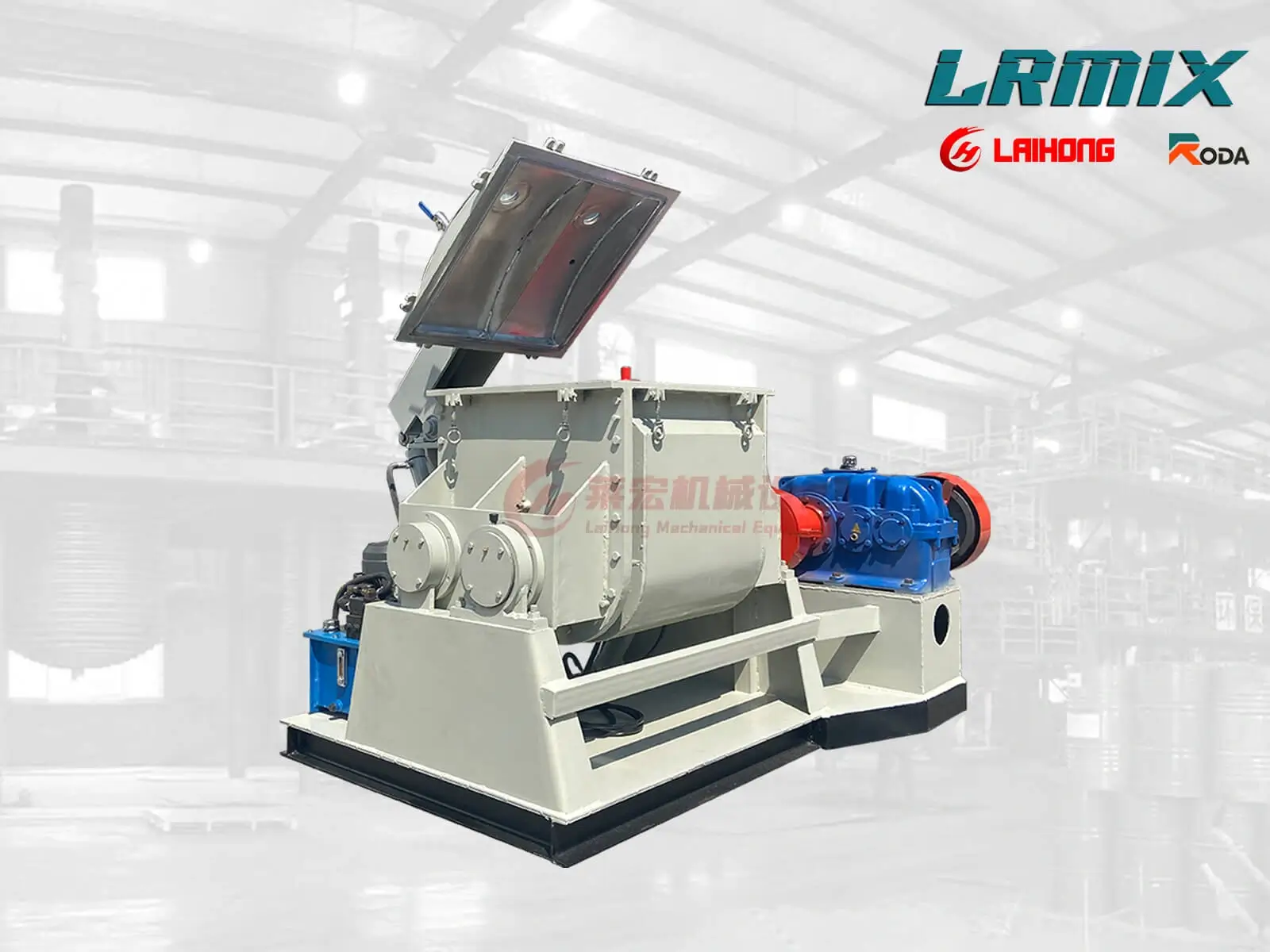
LRMIX hydraulic tilt sigma kneader for chewing gum bubble gum manufacturing

Hydraulic Tilt Sigma Kneader

Heavy-duty sigma kneader with jacketed vessel (heating + cooling) and 130° hydraulic tilt discharge. Designed for batch gum base compounding and full gum mass preparation.

  • Jacket: heating by steam or hot water + cooling
  • Hydraulic tilt 130° — clean, fast discharge
  • ZLY hard-tooth reducer — sustained high torque
  • SS304 food-grade contact surfaces
View Details
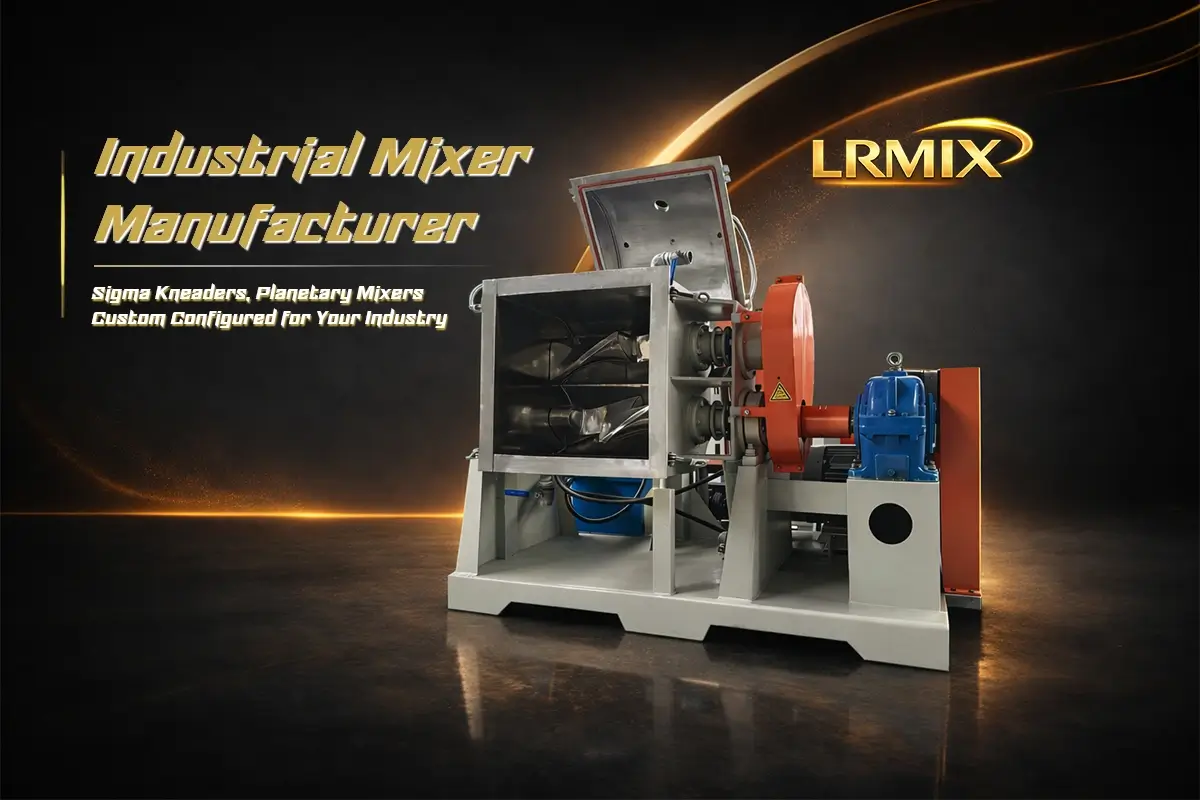
LRMIX sigma kneader machine for gum base and confectionery mixing

Sigma Kneader Machine

Standard sigma kneader for gum base and confectionery mass mixing. Jacketed vessel accommodates both heating and cooling cycles within a single batch process.

  • Dual heating and cooling jacket capability
  • Variable speed with frequency inverter
  • Differential blade speed for efficient kneading
  • Tilt discharge or bottom valve options
View Details
LRMIX sigma kneader range for confectionery food grade gum production

LRMIX Sigma Kneader Range

Full range of sigma kneaders from 5L laboratory scale to 3,000L production capacity. Heating, cooling, vacuum and screw extrusion configurations for all production volumes.

  • 5L to 3,000L — pilot to full production
  • SS304 food-grade as standard
  • Screw extrusion discharge models available
  • GMP-compatible configurations on request
View All Models

Why Confectionery Manufacturers Choose LRMIX Kneaders

Heating + Cooling in One Jacket The same jacketed vessel handles both gum base softening (hot water / steam, 50–70°C) and gum mass cooling (chilled water, ≤ 50°C) — eliminating the need for two separate machines
SS304 Food-Grade Contact Surfaces All parts in contact with the gum mass — blades, trough, end plates and discharge valve — are fabricated in SS304 stainless steel, meeting food manufacturing hygiene requirements
Differential Blade Speed The two sigma blades rotate at different speeds (typically in a 3:2 ratio), creating an asymmetric flow pattern that continuously renews the shear zone and prevents dead spots in the mixing chamber
Hydraulic Tilt Discharge 130° hydraulic tilt allows complete, clean discharge of the sticky gum mass without manual intervention — critical for consistent batch weight and production hygiene
Screw Extrusion Option Screw extruder discharge models eliminate manual handling of hot gum mass and feed directly into downstream forming equipment — suitable for medium to large-scale production lines
Factory Direct, 40+ Countries LRMIX sigma kneaders are supplied to confectionery manufacturers across Southeast Asia, South Asia, the Middle East and beyond — factory direct with full technical support

Need a Sigma Kneader for Chewing Gum Production?

Tell us your batch size, gum type and production volume.
LRMIX will recommend the right kneader configuration — factory direct.

Request a Free Quote
Scroll to Top