
Ceramic & Clay Mixer Kneader
Sigma Kneaders for Ceramic Body Preparation & Clay Homogenisation
Industrial ceramic and clay body preparation requires a mixing and kneading machine capable of working extremely high-viscosity, abrasive materials into a homogeneous, air-free plastic mass. The sigma kneader — with its counter-rotating Z-shaped blades generating simultaneous shear, compression and folding forces — is the established equipment for this task, recommended by leading ceramic engineering specialists including Germatec (Germany) and documented in industrial ceramics literature worldwide. Its combination of high torque capability, vacuum degassing, and screw extrusion discharge makes it uniquely suited to oxide ceramics, technical ceramics, heavy clay and traditional pottery body preparation at industrial scale.
Ceramic & Clay Materials Processed in Sigma Kneaders
Industrial ceramic body preparation involves blending multiple raw materials — clays, feldspars, silica, alumina and various functional additives — into a precisely formulated plastic mass. The sigma kneader handles the full range of ceramic body types, from traditional pottery clay to advanced technical ceramics used in electronics and aerospace.
Why Ceramic Body Preparation Requires a Kneader — Not a Mixer
The fundamental requirement in ceramic body preparation is not simply blending — it is developing plasticity. Plasticity in a ceramic body is the property that allows it to be shaped without cracking and to hold its shape after forming. It depends on two factors: water content and, critically, particle size distribution. The sigma kneader's compression and folding action forces clay particles into intimate contact, developing the interparticle friction and water film distribution that creates genuine plasticity — something a ribbon blender or paddle mixer cannot achieve.
As documented by Digitalfire Ceramic Materials Database, the kneading energy input is especially critical for bodies containing high proportions of talc or non-plastic materials, where purely hydraulic mixing methods fail to develop adequate workability. For technical ceramics, the kneading action distributes binders and plasticisers uniformly around each ceramic particle — a prerequisite for consistent green strength and predictable sintered density.
Air bubbles entrapped within a ceramic body during kneading are a critical defect source. During drying and firing, these voids expand, causing internal cracking, surface blistering and density variations that compromise mechanical strength and dimensional accuracy. For technical ceramics — where tolerances and material properties are tightly specified — vacuum kneading (typically ≥ –0.09 MPa) is not optional. ROSS/AMK (USA) and Germatec (Germany), two of the world's leading ceramic processing equipment manufacturers, both specify vacuum kneader-extruders as the standard for oxide ceramic and advanced ceramic body preparation.
Ceramic Body Preparation Process Using a Sigma Kneader
Selecting the Right Sigma Kneader Configuration for Ceramics
| Configuration | Key Features | Ceramic Applications |
|---|---|---|
| Standard Sigma Kneader | Sigma blades, cooling jacket, hydraulic tilt discharge | Traditional pottery clay, stoneware bodies, general ceramic body homogenisation |
| Vacuum Sigma Kneader | Vacuum system ≥ –0.09 MPa, sealed chamber, tilt discharge | Porcelain bodies, fine ceramic, electrical ceramics — where air-free compound is required |
| Screw Extrusion Kneader | Integrated screw extruder below kneading chamber, continuous output | Oxide ceramics, technical ceramics, heavy clay — where continuous de-aired extrudate feeds forming equipment directly |
| Vacuum Screw Extrusion Kneader | Vacuum degassing + screw extrusion in one machine | Advanced technical ceramics, electronic ceramics, refractory extrusion — highest quality requirement |
LRMIX Sigma Kneaders for Ceramic & Clay Processing
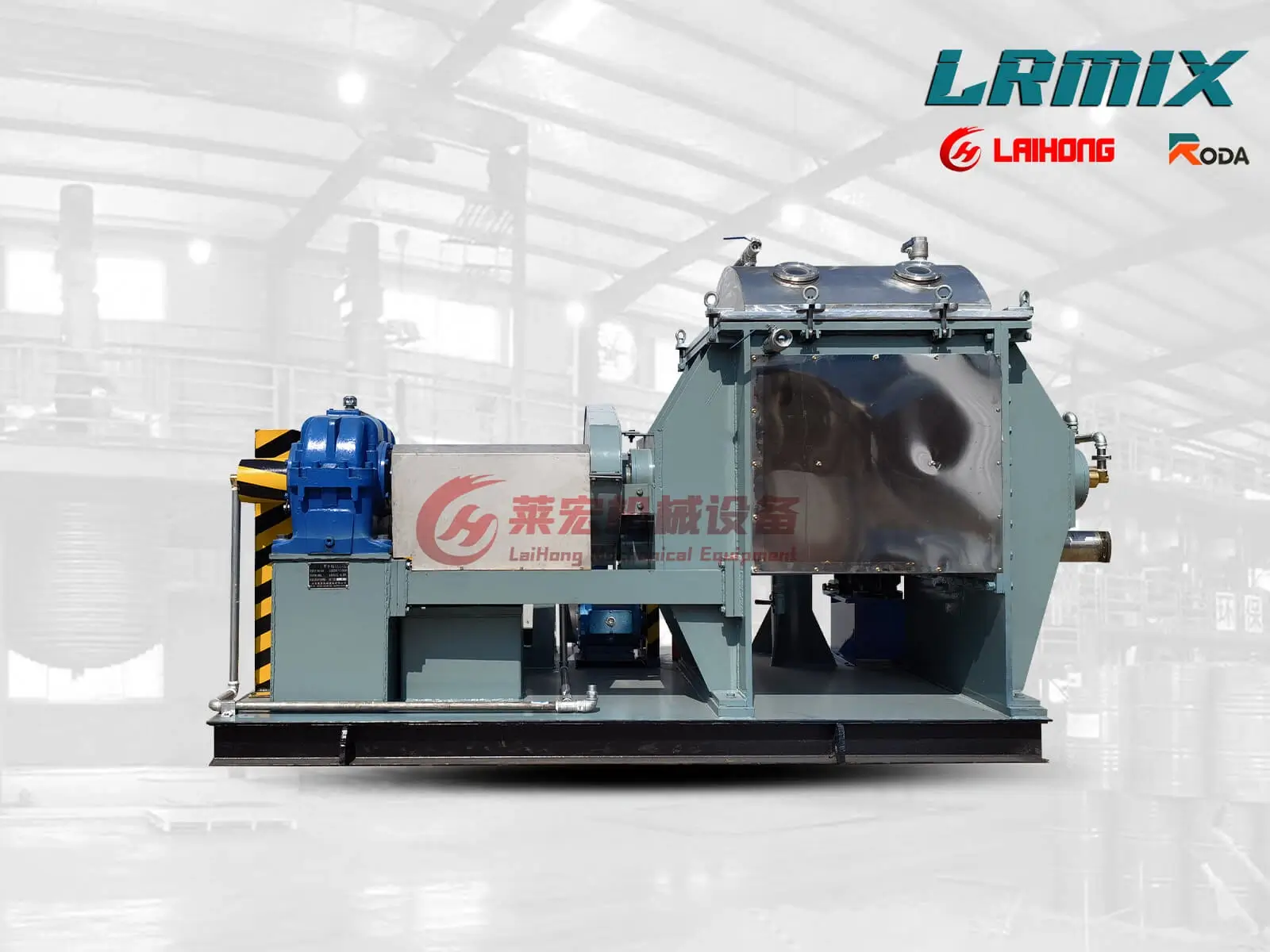
Screw Extrusion Sigma Kneader
Sigma kneader with integrated screw extruder — the preferred configuration for ceramic and clay body preparation. Kneads, de-airs and extrudes the prepared body in a single continuous operation.
- Integrated screw extruder — continuous de-aired output
- Vacuum option for technical ceramics
- Hardened blade surfaces for abrasive ceramic materials
- Cooling jacket for temperature control
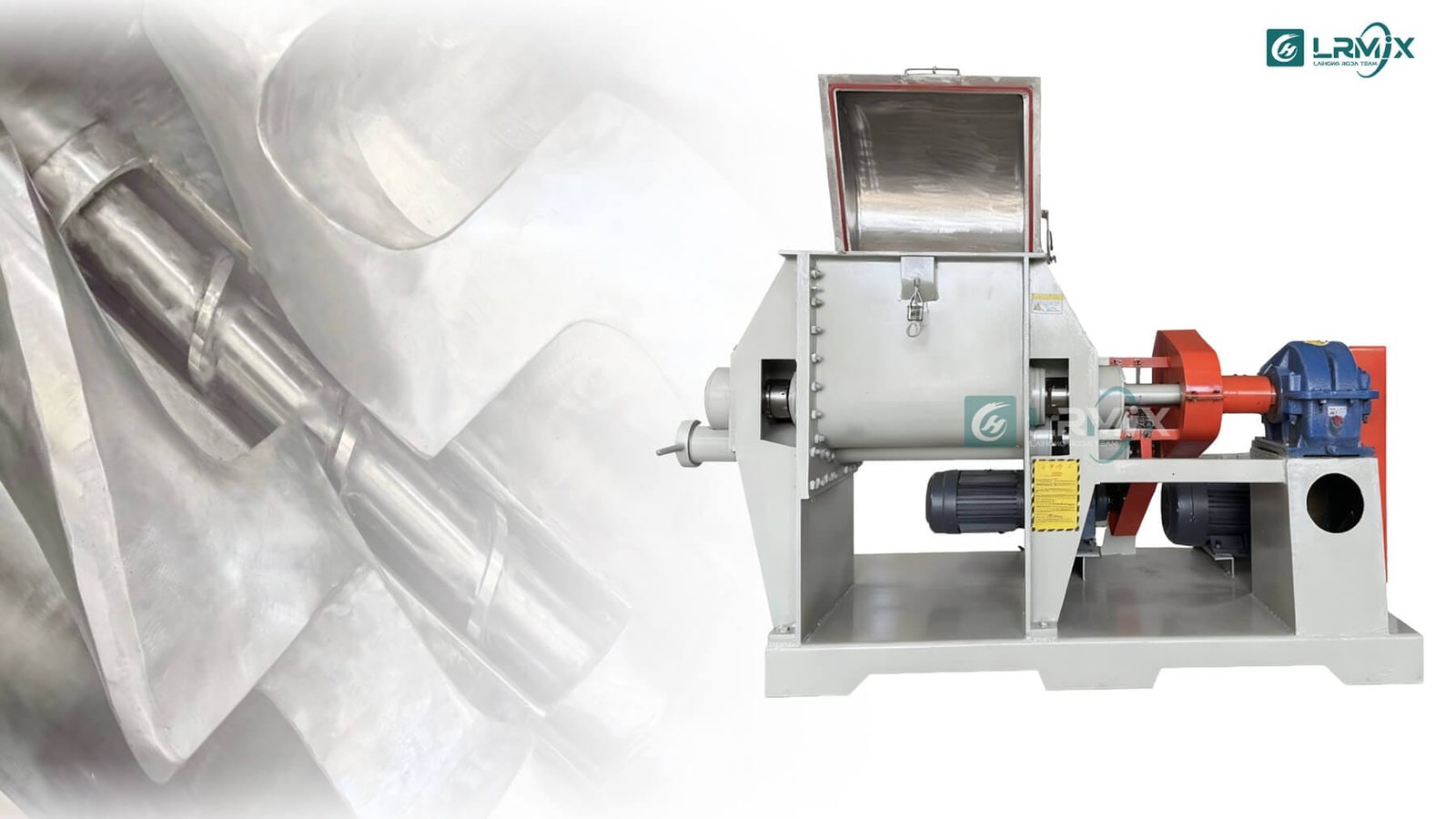
100L Screw Extrusion Kneader
Mid-scale screw extrusion kneader for ceramic body preparation and technical ceramic compound mixing. Vacuum-capable, suitable for small to medium production volumes and R&D scale-up.
- 100L working capacity
- Screw extrusion discharge
- Vacuum system available
- Variable speed frequency inverter control
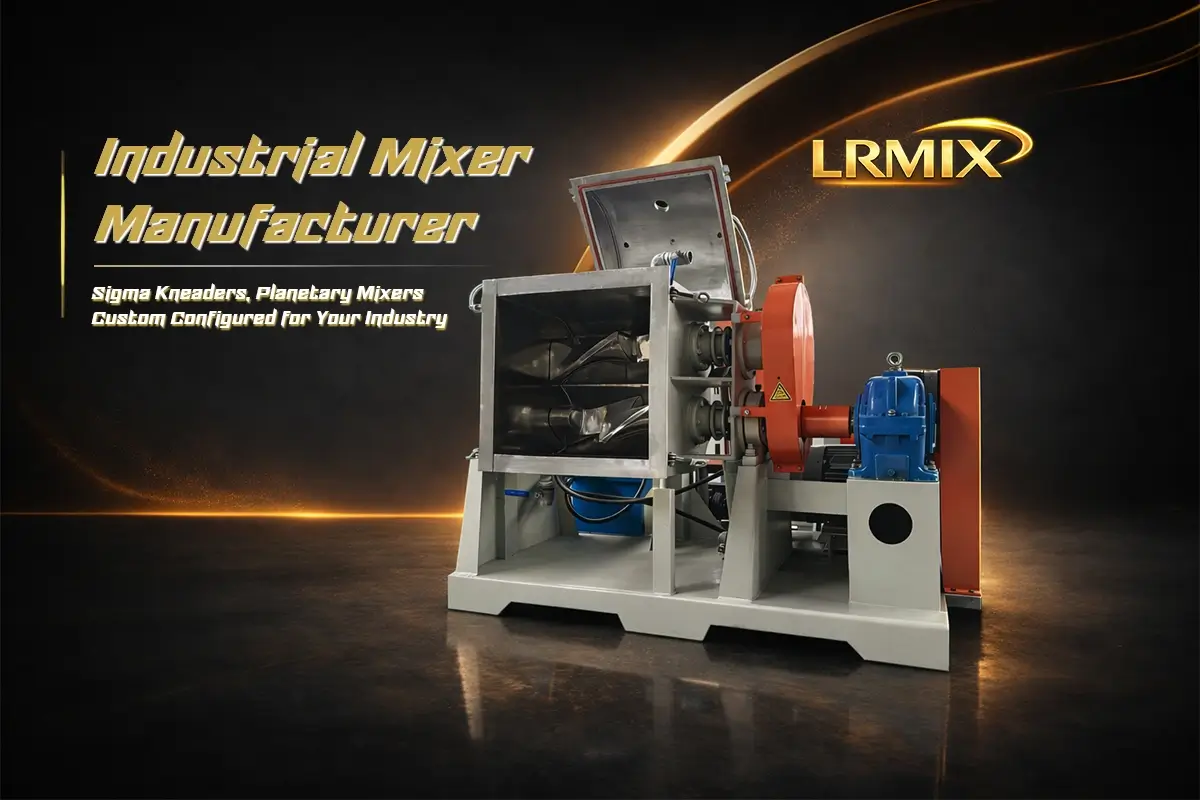
LRMIX Sigma Kneader Range
Full sigma kneader range from 5L laboratory to 3,000L production scale. Tilt discharge, screw extrusion and vacuum configurations — all suitable for ceramic and clay applications.
- 5L to 3,000L capacity range
- Multiple discharge configurations
- Vacuum and non-vacuum models
- Carbon steel or SS304 construction
Why Ceramic Manufacturers Choose LRMIX Kneaders
Need a Kneader for Ceramic or Clay Processing?
Tell us your ceramic material, required capacity and discharge method.
LRMIX will recommend the right kneader configuration — factory direct.