
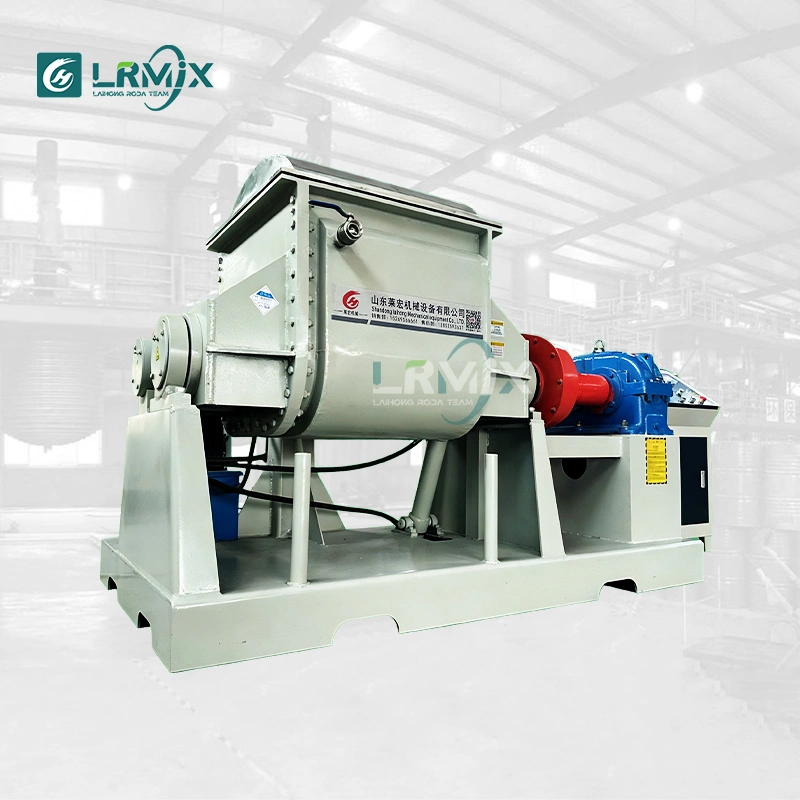
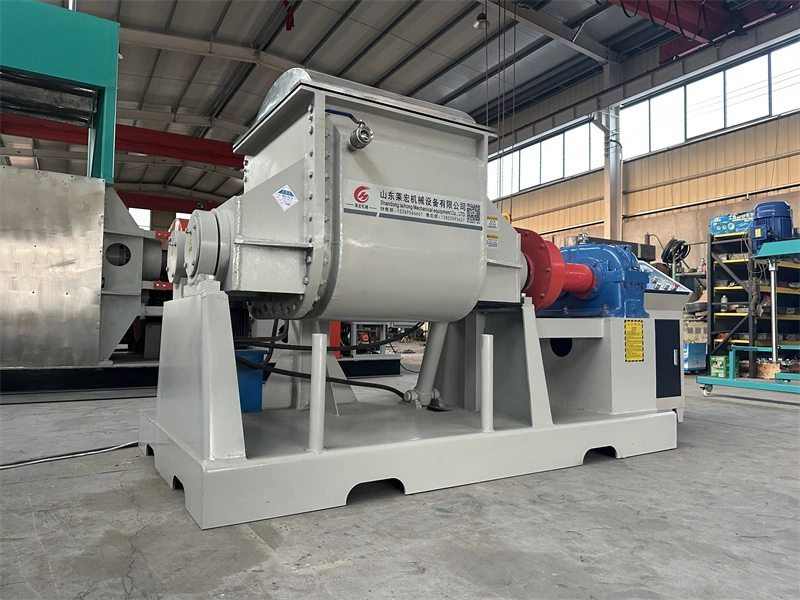
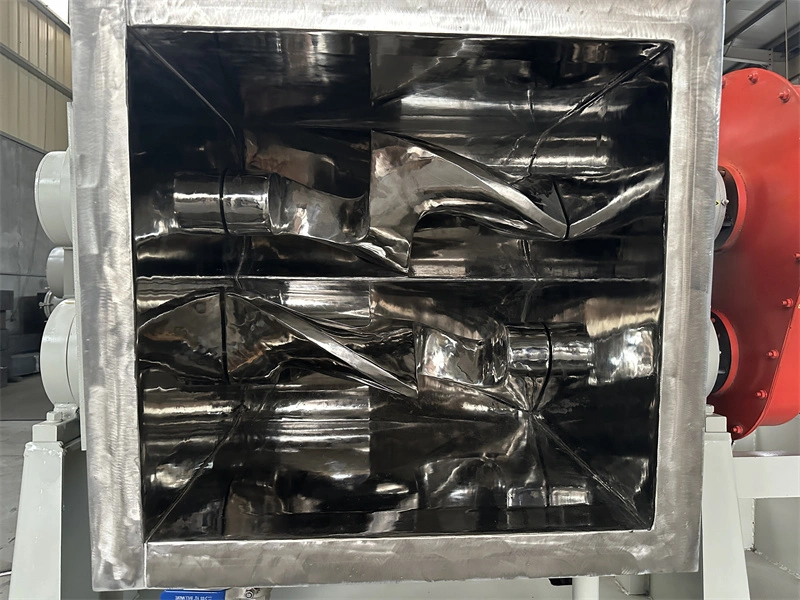
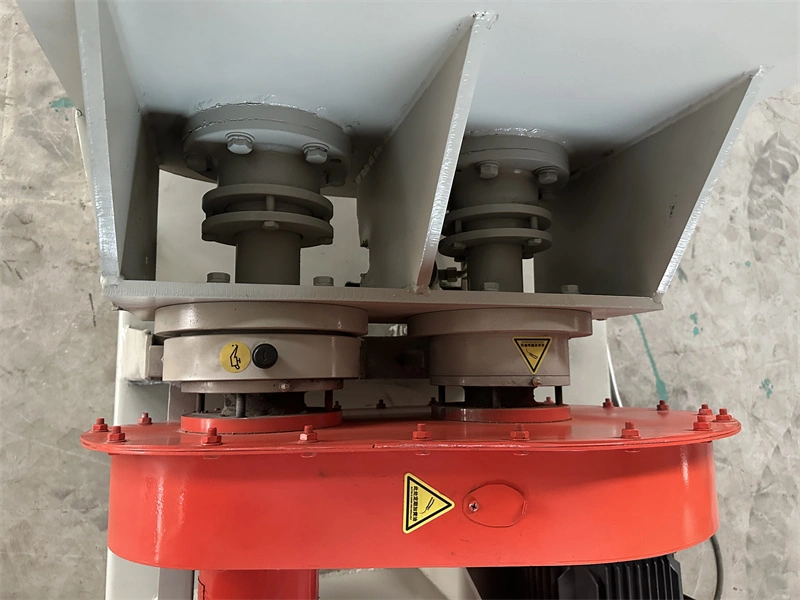
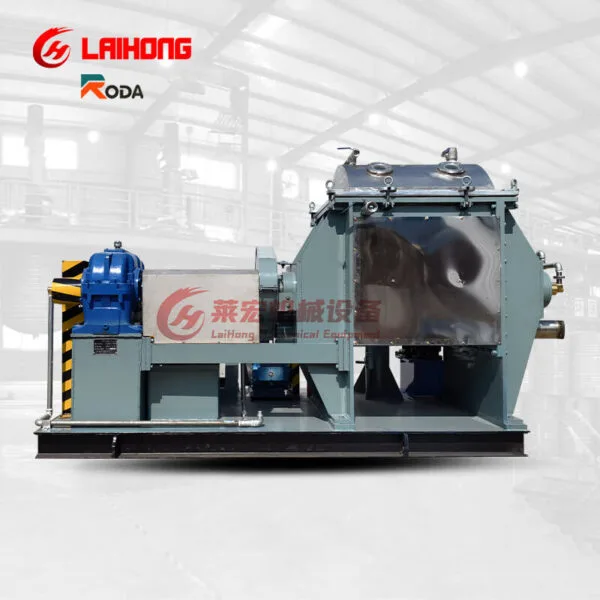
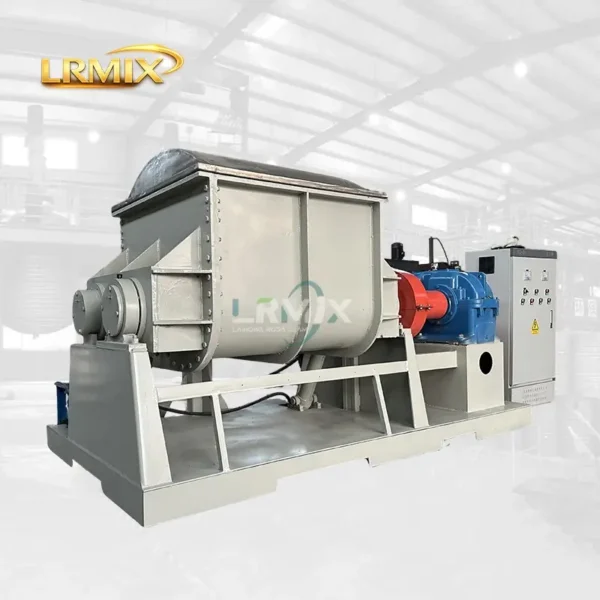
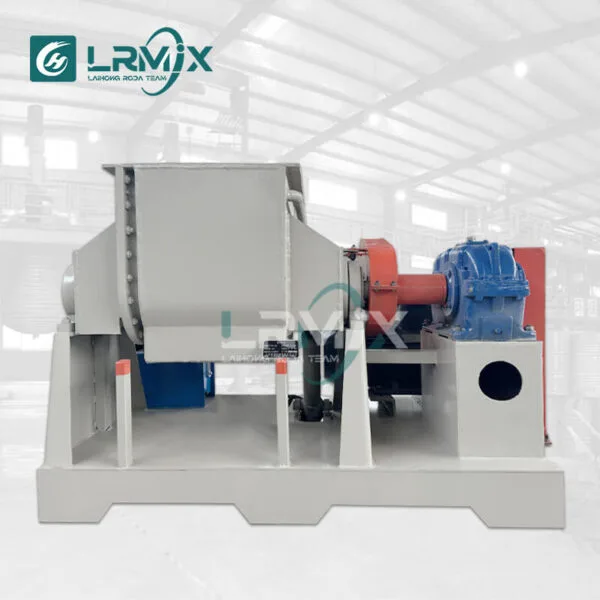
The LRMIX 200L Tilting Kneader is built around one job: mixing silicone rubber. Two sigma blades knead the batch inside a SUS304 chamber, driven by a 15kW motor with an 18.5kW variable frequency drive for blade speed control. A cooling jacket keeps the compound’s temperature in check, and both the tilting discharge and the lid are hydraulic. Vacuum isn’t fitted as standard, but it can be added.
A Tilting Kneader Set Up for Silicone Rubber Compounding
Anyone who has compounded silicone rubber knows the pattern. Filler goes in and sits on top of the gum for a while, then slowly works its way in. As the batch tightens up, shear heats it, and the mass turns elastic and sticky enough that getting it out of the machine becomes its own task. This 200L kneader is arranged around those three problems. The 15kW motor and 18.5kW frequency drive let you load slowly and bring the blade speed up once the filler is wetted. The jacketed chamber can be connected to a water chiller to hold temperature. And a hydraulic tilt turns the whole pot over to empty it, instead of someone digging the batch out.
Common Problems When Kneading Silicone Rubber
Reinforcing fillers are added in large amounts and tend to sit on the gum at the start. Without enough kneading action and a controllable speed, the powder either flies or stays unmixed.
Shear generates heat, and the longer the cycle runs, the more the compound’s temperature climbs. Without a cooling path, the batch’s behavior changes as it mixes.
Elastic, sticky compound doesn’t flow. Scooping it out by hand is slow, leaves residue behind, and makes changing formulas a longer job.
On a 200L machine the lid is not something to lift by hand, and a lid that’s hard to open makes loading and cleaning slower than it should be.
Why This Tilting Kneader
Two blades work the batch against each other and the chamber wall, folding, stretching and shearing the compound so filler is pulled into the gum.
Frequency-drive speed control lets you start slow while the powder is going in, then raise blade speed as the batch comes together.
The jacket around the chamber carries cooling water. Connect a water chiller when you need steadier temperature control over longer cycles.
The chamber tips over hydraulically and the batch comes out in one go, which suits silicone compound that won’t flow on its own.
The lid opens and closes on the hydraulic system, so loading and cleaning don’t depend on lifting it by hand.
The chamber is SUS304 stainless steel. No vacuum system as standard, but one can be added if your process needs air or volatiles removed.
How a Tilting Kneader Runs a Batch
See the Machine on Video
A short video of the LRMIX 200L tilting kneader itself, so you can see the machine described on this page. If you’d like to see it running with your own compound, or want a closer look at a specific part, send us a message and we’ll arrange it.
Technical Parameters
Note: model range shown for reference — motor and drive sizing depends on your compound, so contact us to confirm specifications.
| Model | Volume (L) | Motor (kW) | VFD (kW) | Discharge / Lid | Chamber Material | Jacket |
|---|---|---|---|---|---|---|
| TK-50 | 50 | 7.5 | 11 | Hydraulic | SUS304 | Cooling |
| TK-100 | 100 | 11 | 15 | Hydraulic | SUS304 | Cooling |
| TK-200 | 200 | 15 | 18.5 | Hydraulic | SUS304 | Cooling |
| TK-500 | 500 | 30 | 37 | Hydraulic | SUS304 | Cooling |
| TK-1000 | 1000 | 55 | 75 | Hydraulic | SUS304 | Cooling |
Applications
Used for silicone rubber and other high-viscosity, elastic compounds such as:
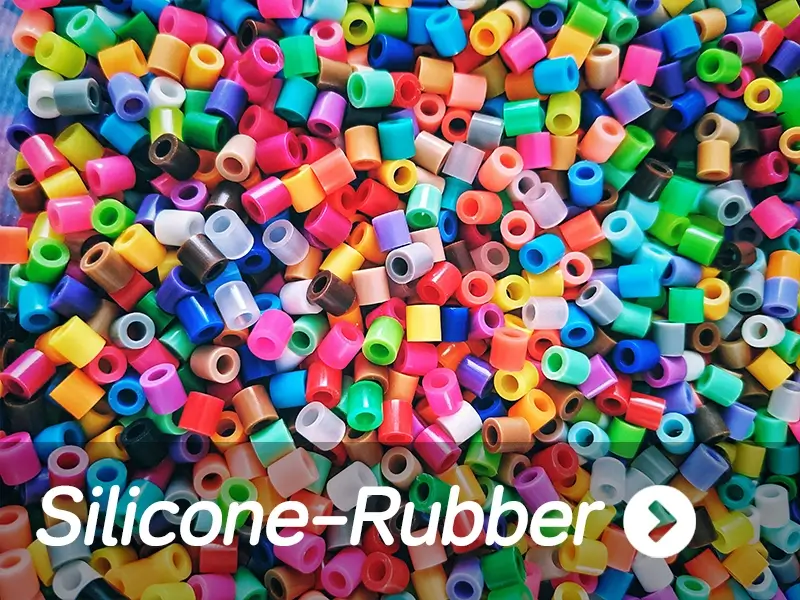
Silicone Rubber Compounding

FAQ
Q1. Can a vacuum system be added?
Yes. It isn’t part of the standard build, but a vacuum system can be added if your process needs air or volatiles removed during mixing.
Q2. Do I need a chiller for the cooling jacket?
The jacket runs on cooling water. For short cycles, plant water may be enough. If your compound generates a lot of heat or you want steadier temperature control, connect a water chiller.
Q3. Can the chamber be made from 316L instead of SUS304?
Standard is SUS304. If your material calls for higher corrosion resistance, 316L can be specified.
Q4. Why tilting discharge instead of screw discharge?
Silicone compound is elastic and sticky, and batches are usually emptied whole. Tipping the chamber gets the full batch out in one pass and leaves the chamber open for cleaning between formulas.
Q5. Is the 15kW motor enough for my compound?
It’s sized for typical silicone rubber formulations. If your compound is stiffer or carries a heavy filler load, tell us the formula and we’ll check the motor and drive against it.
Need a kneader sized to your silicone compound?
Reviews
There are no reviews yet.